Dignity Matters
Our bi-monthly newsletter with interviews, expert input, entertainment, local and global news for the DignitySA community.
From the Chairperson's Desk
Of all the beacons in life’s journey, death is the supreme certainty.
Far from casting a shadow over our lives, the inevitability of our death should be a liberating compass, reminding us of the control we have over our lives. It should guide our perspective on how we live, gently reminding us of life’s privileges and enjoyments, and our responsibilities.
Death – that unavoidable destination – is always preceded by dying. For some, dying is a process, protracted or short; for others, dying is an event, sudden and unexpected. We do not know what it will be.
The dying process may be peaceful and serene. Or it may be consumed by suffering, debilitating and agonising, the most difficult challenge of our lives.
It is in this space that DignitySA locates its vision and mission – in the choices of the dying process, and in professional and institutional support for the options on which we rely to make those choices possible.
Although DignitySA was founded with a focus on assisted dying, it has always publicly engaged with the whole range of end-of-life choice – with refusal of treatment, mitigating suffering, and advance directives (living wills; healthcare proxies). And we were instrumental in the formulation of draft advance-directive legislation.
In the past year, our focus on the full range of end-of-life choices has become more purposeful and is reflected in our social-media engagements and on our website. It testifies to the invigorating presence of a younger generation that has joined our ranks, with an array of original ideas and complementary skills.
Crucial to these developments is our desire to have a wider impact in society – among the public in general but also among interest groups with whom we operate in the same space, most notably the healthcare community, and, in particular, the palliative care community.
This, the first of our newsletters, serves as a window on our concerns and activities. It strives to be informative and educational. In tone, it recognises the gravitas of death and dying but seeks to balance it with a lightness that does not trivialise. The article on palliative care in this inaugural issue is testament to our commitment to championing access to high-quality care for all at the end of life.
DignitySA takes seriously the fact that, ultimately, changes in end-of-life decision-making options will require legal initiatives that strive to make our laws more sensitive to the realities of dying in the era of modern medicine. The permissions granted to us by the Bill of Rights of our Constitution are, in our opinion, as yet unrealised. Hence, we will revive the stalled draft advance-directive legislation, and we are on the brink of lodging our papers in the High Court to decriminalise and legalise assisted dying.
The donations we’ve received to date have made these legal initiatives possible and now we are looking to grow our communications and advocacy activities. This newsletter marks that beginning, and we hope you will travel with us. It is likely that there is a long road ahead to make a lasting difference in the lives of all South Africans, and we are committed to this. Your support makes all the difference – we treasure it, and welcome hearing from you.
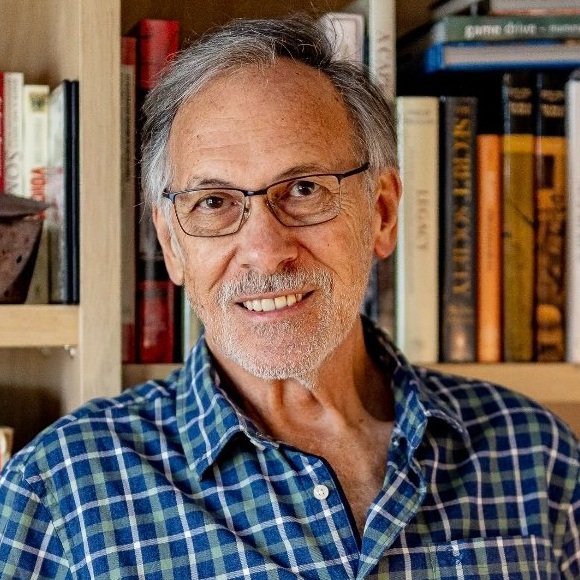
Prof Willem Landman
Chairperson
The Exit Interview

Dignity Matters poses some questions to:
Nik Rabinowitz, South Africa's much-loved stand-up comedian, actor, author, TV presenter, and podcast host, known and admired for his multilingual comedy and social commentary.
THE EXIT INTERVIEW with Nik Rabinowitz
If calories and indigestion were no object, what culinary indulgence would be your last?
The last thing you taste before meeting your maker should be something that makes you question if meeting your maker is really necessary, which is why I’d kick off with a 5g magic mushroom starter, followed by six hours of dimensional time travel, then an oyster or twelve, one crayfish tail, my mother’s guinea fowl casserole, and a slice of Lucie Rie’s chocolate tort. That’s the circle of life right there – you start by seeing God and finish by tasting heaven.
Ideally, how would you like to go?
At home, in my sleep, surrounded by loved ones. But let’s be honest, that’s the brochure version of death. As a stand-up comedian, I’ve died on stage plenty times, so my second choice would be “work-related heart attack”, aged 97, while MCing the Highlands House Jewish Retirement Home Bingo Night. … The laughter is explosive. As my arteries close up shop, I think: “I may be dying, but I’m also absolutely killing it.” BOOM! I drop the mic. BANG! I drop dead. And THAT gets the BIGGEST LAUGH of the night. The ultimate punchline.
In what publication would your obituary appear, and what would its glorious and slightly exaggerated but still somewhat truthful headline, be?
In my dreams, the front page of The New York Times reads: ”COMEDIAN TOUCHED HEARTS, UNITED HUMANITY, USHERED IN WORLD PEACE;” Realistically? The Cape Times, page 17, wedged between a Checkers ad and a Kalk Bay Roadworks Notice. It’s only in the Cape Times because (before her death) my mother paid for a full-page ad with the Headline: “COMEDIAN DIES: JEWISH MOTHER CONFIRMS HE COULD HAVE BEEN A DOCTOR” (I’d appreciate it if the Cape Times would also accidentally run a photo of Marc Lottering instead of me.) The Daily Voice, meanwhile, must please go with: “SNAAKSE MAN KICKS BUCKET: Was it murder???” with absolutely no evidence suggesting foul play whatsoever. The Jewish Report headline would be: “BELOVED COMEDIAN PASSES: COMMUNITY ASKS, BUT WAS HE REALLY THAT JEWISH?”
Imagine your memorial service. What kind of music would be playing? What band or artist would be grateful for the opportunity to perform?
At the traditional Jewish funeral, Cantor Choni Goldman will deliver his haunting, ancient melodies. At the memorial Choni will team up with Don Copley and The Khayelitsha Klezmer Band (doesn’t exist but hopefully will by then) to perform “Nkalakatha” on clarinets and violins, while everyone awkwardly tries Zulu dance moves while keeping their yarmulkes on. I would be bringing South African cultures together, even in death! Alan Committie and Rob van Vuuren will then perform a Waldorf Eurythmy-inspired interpretive dance eulogy, accompanied by Aunty Merle Abrahams on piano. Next up, the Cape Town Philharmonic team up with Aron Turest- Schwartz, Karen Zoid, and Zolani Mahola for a stirring rendition of Monty Python’s “Always Look on the Bright Side of Life”. For the finalé, Johnny Clegg performs “Osiyeza” from beyond the grave via hologram.
Burial or cremation? And – if transport, permissions, and expense were no problem – where would you like to be buried, or have your ashes scattered?
For the sake of one-stop grief shopping, I’d like to be buried next to my dad, but that’s probably not going to happen, because my gran’s ashes are in the plot reserved for my mom, who wants to be next to my dad. It’s complicated.
If you could choose one object to be buried or cremated with, what would it be and why?
I’d like to be buried with the Gray Nicholls cricket bat I came closest to scoring a century with. The bat represents my peak athletic achievement. I remember leaning on that bat, in the middle of the Claremont Oval, on 96 not out, thinking, “This is it, Nik. This is your moment. This is when you become a legend.” And then… ninety-six not out became just... ninety-six. Four runs short of a century. FOUR! (There’s some controversy about this dismissal as well, from a predictable source – Ed.) Some people’s lives are defined by their marriages, their careers, and their children. Mine is defined by those four missing runs. If there’s any justice in the universe, I’ll get those four runs added to my cosmic scorecard. Then, and only then, will my soul finally be at peace. Unless, of course, they ask me to open the batting in heaven. With Dale Steyn steaming in from the Pearly End.
If you were to haunt somewhere after your demise, where would it be, and why?
The Baxter Theatre would be high on my list. After decades of performing there, I deserve squatter’s rights in the afterlife. Surfer’s Corner in Muizenberg would also be an obvious choice, because it’s already filled with people having near-death experiences. I’ve had at least two there.
Who’s in your will? And is there anything you’re leaving that might cause a fight?
For now, my will states that everything goes to my wife (I think)... which is the most married-man statement ever. My jokes go to any comedian who promises to use them better than I did. It’s like a comedic organ donation – “These punchlines are still viable! Quick, transplant them into someone with better delivery!” My Desmond Tutu impression, however, will be buried with me. Some things are too risky to pass on in today’s climate.
What do you still need to do before you kick the bucket?
I found an old bucket list on my phone. There’s the adventure section, your classic middle-class bucket list items that scream ”I want experiences that look good as Facebook cover photos!” I’ve also listed “achieve a 2-3 minute breath hold” for free- diving purposes, although my personal best remains 38 seconds, achieved while hiding from my children during lockdown. In between the adventures and hallucinations, there are the heartfelt items: publishing a book on my dad’s ceramics career, building an off-grid mountain retreat cob-house, and visiting my grandfather’s village in Lithuania. Oh, and assisting our housekeeper, Nosipho, in launching her own restaurant. Because nothing says “I’m a good person” like helping someone escape the torture of having to clean up after my family. The truth is, what I need to do before I kick the bucket is accept that I probably won’t do most of these things. And that’s okay. Because the real bucket list items – the ones that matter – are the quiet moments with my family, the special times shared with friends, the times I made strangers laugh out loud.
Finally, is there anything about death that you’ve always secretly wondered about, but have been too polite to ask?
I’ve got a LOT of questions: Does our life flash before our eyes? And if so, is it like Netflix, where you can skip the intro, or more like those unskippable YouTube ads? Because there are chunks I’d like to fast-forward through. I wonder about the whole tunnel and lights experience. Apparently, my father-in-law got it, but only because he was an avowed atheist. According to my favourite psychic rabbi, not everyone gets it, which seems unfair. It’s like some people get the full afterlife IMAX 3D experience, and others get the straight-to-DVD release. “Where’s my tunnel?” “Sorry bra, budget cuts. Best we can do is a slightly bright cupboard with a Consol solar jar that hasn’t been charged properly.” I’d also like to know why interacting with the living is as hard as mediums claim? They always sound so dramatic. “I’m getting... a message... from someone... whose name has letters in it...” Why does it seem almost impossible for the dead to give their loved ones signs they’re not completely gone? Is the human dissociative barrier so strong that most of us just can’t receive the messages? Is the cosmic Wi-Fi that bad? Are there spiritual regulations? Finally, will I get to meet God / the Divine / the Great Mysterious Benevolent Force / that which cannot be named? Perhaps they’ll check my blue scorebook and say, “Eish, 96 not out?” What will their pronouns be? Will they have a South African accent? Will they ask questions like “How you, boet, you well? Ja no, you weren’t exactly what we were going for with humans, but hey, you tried, hey? Anyways, how’s the Afterlife treating you? You keeping busy?”
Expert Input
Palliative care - an extension of medical care: myths and facts
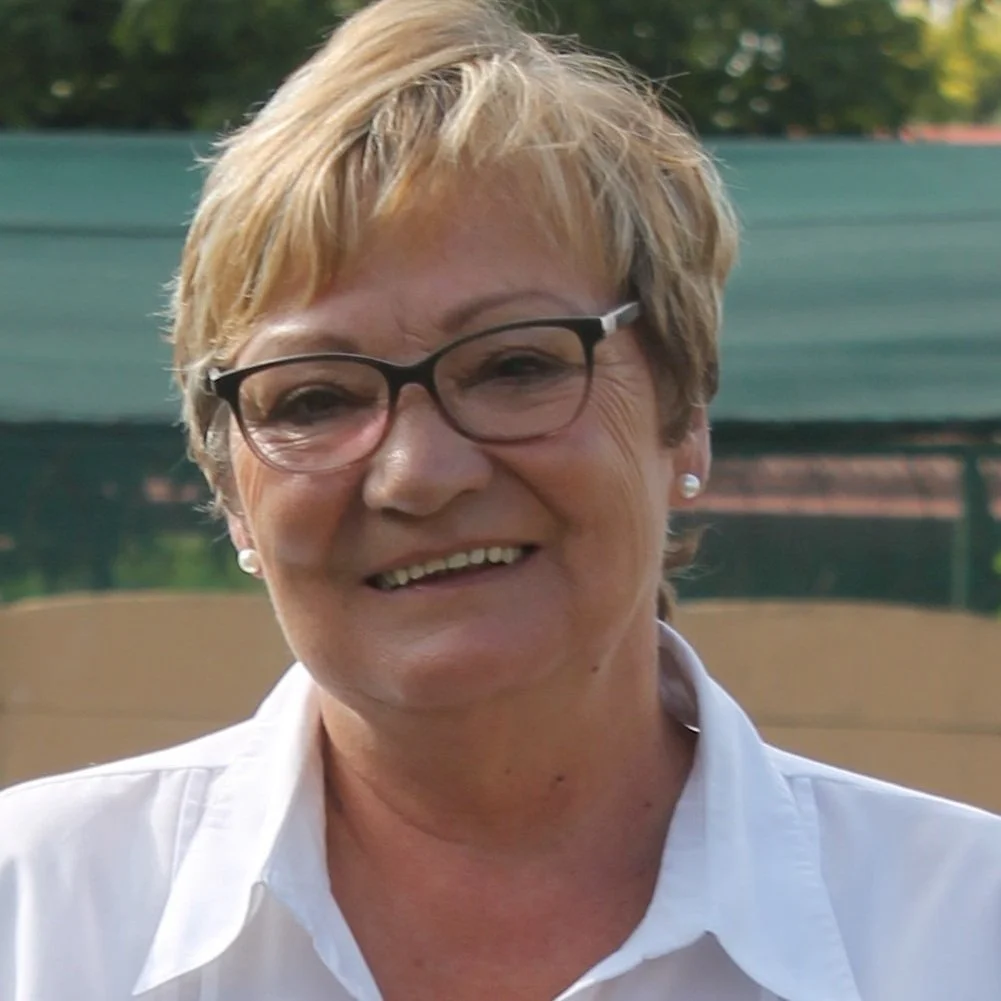
By Tersia Burger – CEO of the APCC
The Association of Palliative Care Centres (APCC) is a national association for service providers that provide vital palliative care resources to both insured and uninsured South Africans, through self-funding activities and limited formal financial support.
The palliative care sector in South Africa started post a visit in 1979 from Dame Cicely Saunders, pioneer of the Hospice movement in the United Kingdom. HospiceWits was founded that year, followed by St Lukes Hospice in 1980, Highway Hospice and South Coast Hospice in 1982, Helderberg Hospice in 1986 and the formation of the Hospice Association of South Africa (HASA) in 1987.
The timeline climbs from there, with the Association producing the Standards for Palliative Healthcare Services, building qualification and training courses, supporting hospices, and dialoguing with the Department of Health to integrate palliative care into healthcare systems. A rebrand took place in 2007 to the Hospice Palliative Care Association (HPCA) as the word ‘hospice’ was, and still is, often understood to be ‘end-of-life care’.
Another rebrand was launched in 2023 to the current APCC, defining palliative care as ‘the physical, psychological, social and spiritual care provided by an inter-disciplinary team of experts to anyone with a life-threatening illness and their loved ones. Care is offered from the point of diagnosis and extends to bereavement support if needed.’
Through the decades, there have continued to be misconceptions about palliative care and this article lists a few of them.
Myth: Palliative care is end-of-life care
Fact: Palliative care is holistic and includes the physical, psychological, social and spiritual care provided by an inter-disciplinary team of specialists to both adults and children with a life-threatening diagnosis. Palliative care can and should be provided alongside curative treatments for life-threatening illnesses, ideally from diagnosis. Palliative care can help both the diagnosed person and their loved one’s cope with aggressive treatments through the management of pain and symptoms and providing psychosocial and spiritual support. In order to enhance well-being, it is highly recommended upon receiving a serious diagnosis that an engagement is made with a palliative care centre as soon as possible.
Adults and children with chronic conditions such as HIV/AIDS, drug-resistant TB, chronic respiratory diseases, cardiovascular and neuromuscular diseases, MND and more; all benefit from palliative care. While people can move in and out of a palliative care service, they may remain beneficiaries of the services for as long as they (or their loved ones) need or wish to. Patients may be discharged from the service if they are doing well and able to function independently. This is always negotiated between the patient, family and members of the care team.
Myth: I have to be admitted to a hospice
Fact: Palliative care is primarily provided at the patient’s home as well as in frail care, step-down and childcare facilities, hospitals and care homes for the elderly. Some APCC members have in-patient units (IPUs) where patients are provided with 24- hour care.
Myth: I should be at the end-of-life phase before registering for palliative care
Fact: Each organisation has an admission process where medical records are requested, and they assess what is required for both the patient and loved ones. Recommendations are then made, and the process for registration is undertaken. APCC members are comfortable working alongside the primary clinician or specialist. They can provide a supportive extension of care to the patient and their loved ones; in most cases, the APCC members and interdisciplinary teams collaborate and work alongside the referring doctors who are treating the patient. They also provide supportive care to the patient’s loved ones; this may include advanced healthcare planning, as well as psychosocial and spiritual support.
The inter-disciplinary palliative care teams typically consist of a medical doctor, nurse, social worker and home-based carers and services are offered via hospices/palliative care centres, who are recognised as ‘specialists’ in palliative care.
Myth: Palliative care is only for the patient
Fact: Support is provided for loved ones as soon as the palliative care team is engaged. When a patient dies, bereavement or grief support is provided, as it is considered to be an important aspect of the care in terms of ‘healing’ and promoting general emotional well-being.
Myth: Palliative care is not affordable
Fact: Some Medical Aids pay for the services provided to their members, some people pay for themselves, and some people are subsidised by the APCC member. This is discussed directly with the hospice/palliative care centre.
Myth: Hospices can’t provide high quality levels of care
Fact: APCC members are required to comply with the Standards for Palliative Healthcare Services, approved by the Council for Health Service Accreditation of South Africa (COHSASA) and the International Society for Quality in Health Care (ISQua). These Standards are internationally recognised and benchmark the quality of services that our members provide and APCC members are audited against the Palliative Healthcare Standards.
Palliative care is an international human right for all persons living with a life-threatening illness. We are honoured to work with our members to ensure that we provide quality palliative care to all in South Africa.
With Care beyond Service.
On the Lighter Side
Popcorn Time

REVIEW: MILLION DOLLAR BABY
Reviewed by: Dawid van der Merwe
Rating: ★★★★½
Million Dollar Baby: A Haunting Knockout That Speaks to the Heart of Dignity
[SPOILER ALERT - If you haven't watched the movie, this review contains major plot details.]
Clint Eastwood’s Million Dollar Baby is more than a sports drama. It is a soul-searing meditation on autonomy, love, and the ethics of dying. In the quiet ache beneath the film’s pugilistic grit lies a question that sits at the core of the DignitySA campaign: What does it mean to live and die, with dignity?
The film follows Frankie Dunn (Eastwood), a weathered boxing trainer, and Maggie Fitzgerald (Hilary Swank), a determined underdog who walks into his gym and refuses to leave until he trains her. What unfolds is a deeply human story about aspiration, belonging, and ultimately, the cruel twists that life, and fate, can throw.
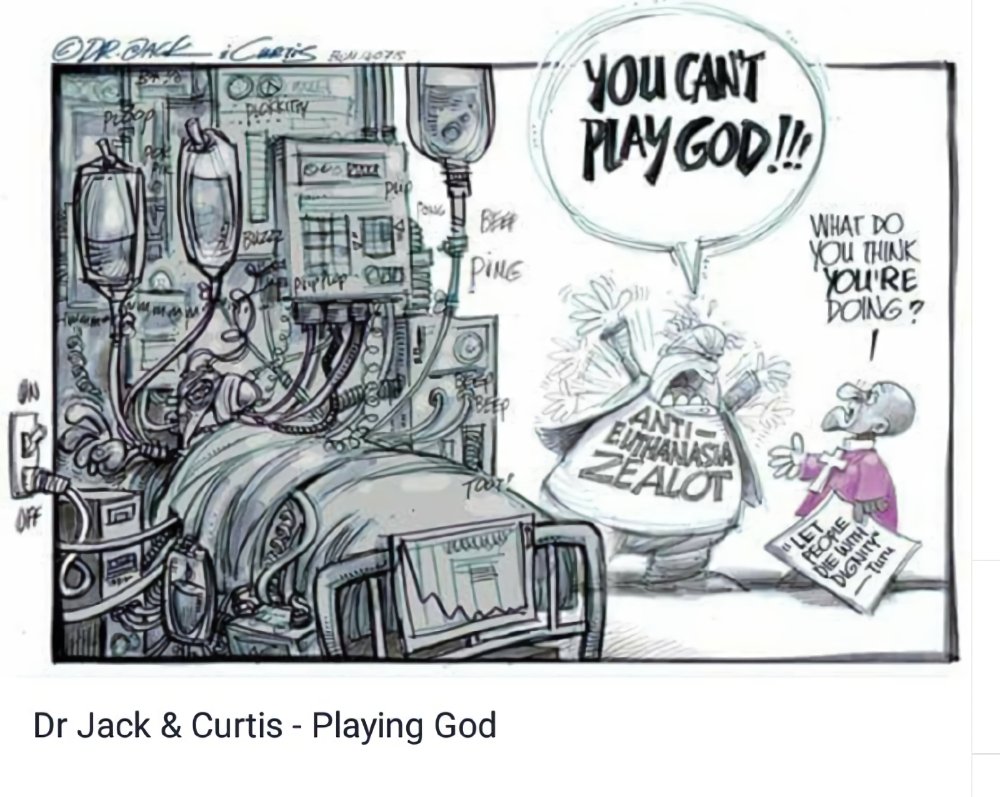
When Maggie suffers a catastrophic spinal injury at the peak of her boxing career, the film pivots from triumph to tragedy. Now quadriplegic, in constant pain, and dependent on machines, Maggie makes a final request of Frankie: to help her die. This moment, tender and devastating, becomes the film’s emotional fulcrum, forcing us to confront the moral complexities of assisted dying.
Frankie’s choice, carried out in agonizing silence, is not born of convenience or despair, but of profound love and respect. He honours Maggie’s wish not out of hopelessness, but because he sees her full humanity, even in her broken body. He sees her right to choose. Million Dollar Baby never lectures; it simply shows us the brutal dignity of one woman’s fight to control her end, when all else has been taken from her.
For DignitySA, which advocates for the legal right of terminally ill South Africans to choose a medically assisted death, Million Dollar Baby is not just cinema, it is testimony. It gives voice to the silenced, to those whose suffering is invisible behind hospital curtains and courtroom debates.
In Maggie’s story, we are reminded that compassion sometimes requires letting go, and that dignity is not defined by survival, but by agency. The film leaves us with no easy answers, but with one resonant truth: love does not always mean holding on. Sometimes, it means giving someone the freedom to leave.
Good Reads
REVIEW: Me Before You
by Jojo Moyes
Reviewed by: Dawid van der Merwe
Rating: ★★★★½
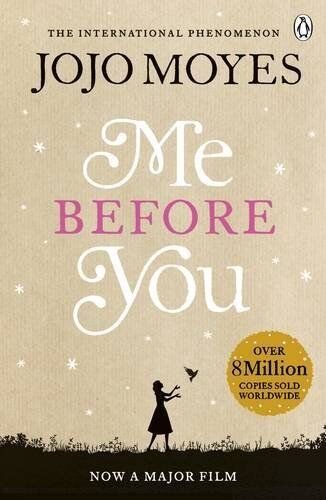
Jojo Moyes’ Me Before You is not just a love story, it’s a heart-wrenching exploration of autonomy, identity, and the unflinching right to choose one’s ending. Beneath its romantic framing lies a novel of deep ethical complexity. One that doesn’t flinch from the raw edges of what it means to live, and what it means to want to die with dignity.
We meet Will Traynor, once a titan of business and thrill-seeker, now a quadriplegic after a tragic accident. Trapped in a body he no longer recognizes, Will has made a painful, deliberate decision: to end his life on his own terms. Into his world stumbles Louisa Clark, a quirky, working-class woman whose job it becomes to inject brightness into his days, and unknown to her at first, perhaps convince him to stay.
Moyes handles this morally charged premise with remarkable grace. She offers no neat answers, only questions that deepen with every chapter: Is love enough to make a life worth living? Is the desire to die ever a rational act? What do we owe the people we love, our presence, or our understanding?
What elevates Me Before You beyond standard romantic fare is its refusal to condescend to the complexity of assisted dying. Will is never cast as pitiable, nor Lou as a savior. Their dynamic is tense, loving, and painfully human. When Will’s choice becomes inevitable, the novel doesn’t exploit the tragedy but instead leans into the bittersweet beauty of a life lived fully, right up until the end.
Some critics have debated the book’s depiction of disability and autonomy, and those discussions are vital. But to dismiss the novel as merely tragic or romantic is to miss its beating heart: Me Before You is about the radical act of choosing how we leave this world, and the transformative power of being truly seen before we go.
It is, ultimately, a novel that dares to ask: What does it mean to love someone enough to let them go?
South African Update
Stransham-Ford Legacy Continues
Ten years after the landmark Stransham-Ford case reignited the debate on assisted dying in SA, new legal efforts are gaining traction in 2025.
The permissions granted to us by the Bill of Rights of our Constitution are, in our opinion, as yet unrealised. Hence, energised by a number of large bequests, a new dedicated legal team, and building operational capacity Dignity SA will revive the stalled draft advance-directive legislation, and is on the brink of lodging papers in the High Court to decriminalise and legalise assisted dying. We are greatful for the donations we’ve received to date which have made these legal initiatives possible, and now we are looking to grow our communications and advocacy activities. This newsletter marks that beginning. If you have a personal story that amplifies our campaign, please click on this link https://www.dignitysouthafrica.org/contact, upload it there, and we will make sure that you are heard.
Global News Round-Up
Legislative Battles in Progress:
Countries Where Assisted Dying is Legal:
Netherlands, Belgium, Luxembourg – Euthanasia is legal for adults and, in specific cases, minors.
Canada – MAiD (Medical Assistance in Dying) is accessible under strict criteria.
Colombia – Court rulings have confirmed euthanasia as a constitutional right.
Switzerland – Assisted suicide legal, with support from non-profit organizations.
Spain & Portugal – New laws allow euthanasia with multiple safeguards.
Australia (VIC, WA, TAS, SA, QLD, NSW) – State-level legalisation with rigorous protocols.
New Zealand – Legal under the End of Life Choice Act (2021).
United Kingdom – A renewed bill sponsored in the House of Lords is under debate.
Germany – Following a constitutional ruling, lawmakers are working on regulatory frameworks.
United States – 11 states + DC allow medical aid in dying; campaigns are active in 20 more states.
France – New bioethics law under consideration with provisions for end-of-life autonomy.
Ireland & Chile – Bills tabled in parliament, awaiting legislative hearings.
South Africa – Dignity SA will revive the stalled draft advance-directive legislation, and are on the brink of lodging papers in the High Court to decriminalise and legalise assisted dying.
More Articles From Our Website

Mortal Melodies

You will enjoy this eclectic easy listening playlist as much as we do, courtesy of Douglas Werewolf
-aka Sean O'Connor, host of the excellent podcast-
Join Us
Become A Member of our non-profit voluntary association by clicking the “Become A Member” button on this page: https://www.dignitysouthafrica.org/support
Members will be invited to attend our online Annual General Meeting and will receive our unique newsletter. For more information and any queries, please contact [email protected]
