Join us Donate

Medical Assistance in Dying

DignitySA's constitutional case for a compassionate, carefully safeguarded legal framework in South Africa.

A rights-based case for choice at the end of life

Some South Africans, facing a terminal or irremediable illness and suffering they cannot bear, ask their doctor for help to die. Today the law forces the doctor to refuse, and leaves the patient to keep suffering, travel abroad, or die alone.

DignitySA is not arguing for an unregulated shortcut. We are asking for a legal framework that recognises dignity, autonomy and compassion, paired with careful clinical assessment and context-appropriate safeguards.

MAiD is currently unlawful in South Africa, and DignitySA cannot assist anyone to die while the law remains unchanged. Our work is public-interest advocacy, legal reform, education, and support for people navigating the lawful end-of-life choices that already exist.

UPDATE as of 22 July 2026: We welcome the decision by the National Director of Public Prosecutions (NDPP) not to oppose our landmark constitutional challenge for the decriminalisation and legalisation of medical assistance in dying (MAiD). In a notice, filed on 15 July 2026, the NDPP indicated that it will abide by the decision of the North Gauteng High Court.

The NDPP is the last of the four respondents cited in DignitySA’s court application to make its position known. Its decision means that, together with the Minister of Justice and Constitutional Development, who declined to oppose the application in May, the two respondents responsible for the criminal-justice dimension of this case will accept whatever decision the court makes.

Our application remains before the court, and the Minister of Health and the Health Professions Council of South Africa (HPCSA) will oppose the application. As this is a public interest case, we will be approaching the Deputy Judge President of the North Gauteng High Court to ask for a case management directive that provides timelines for these parties to file their papers.

UPDATE as of 10 July 2026: To date, we have heard from three of the four respondents. The Minister of Health and the Health Professions Council (HPCSA) will oppose our case. The Minister of Justice & Constitutional Development has confirmed that she will not oppose our case, and will abide by whatever decision the court makes.

We have not received any response from the National Prosecuting Authority (NPA), despite it being two months past its deadline.

What happens next?

Because this is a critical public-interest case, our next step is to request a meeting with the Deputy Judge President (DJP) of the North Gauteng High Court. We will ask the DJP for a case management directive, which is an official court instruction that sets strict timelines for the remaining parties to file their papers, and how exchanges will happen in future.

If we cannot secure this meeting, we already have a preliminary court date set for September 18th, where we will formally ask the court to step in and enforce a timetable.

UPDATE as of 9 June 2026: The Minister of Health, Dr Aaron Motsoaledi, has indicated that he will oppose DignitySA’s constitutional challenge. We anticipated this, and now wait to hear how the fourth and final respondent, the National Prosecuting Authority (NPA), will respond.

UPDATE as of 4 June 2026: The Minister of Justice and Constitutional Development, Ms Mmamoloko Kubayi, has indicated that she will not to oppose our constitutional challenge and that she will abide by the decision of the North Gauteng High Court. This is a significant development that reflects a growing recognition that the current common law prohibition against medical assistance in dying (MAiD) cannot be reconciled with South Africa’s constitutional commitments to dignity and compassion.

UPDATE as of 27 May 2026: The deadline for the four respondents in our case to indicate if they oppose us was the 8th of May. To date, only the Health Professions Council of South Africa (HPCSA) has done so. We do not know what the other three respondents’ intentions are (the Minister of Health, the Minister of Justice and Constitutional Development and the National Prosecuting Authority). We now await (at least) the HPCSA’s answering affidavit. Amici curiae (friends of the court) may join the appellant, DignitySA or respondents. Then DignitySA will have the opportunity to submit a replying affidavit. Once all the documentation has been submitted, the parties will meet in court.
The legal question begins with people

DignitySA’s application rests on constitutional law, clinical evidence and comparative safeguards. It is ultimately about South Africans whose suffering makes the absence of a lawful choice cruel. Two of them are below.

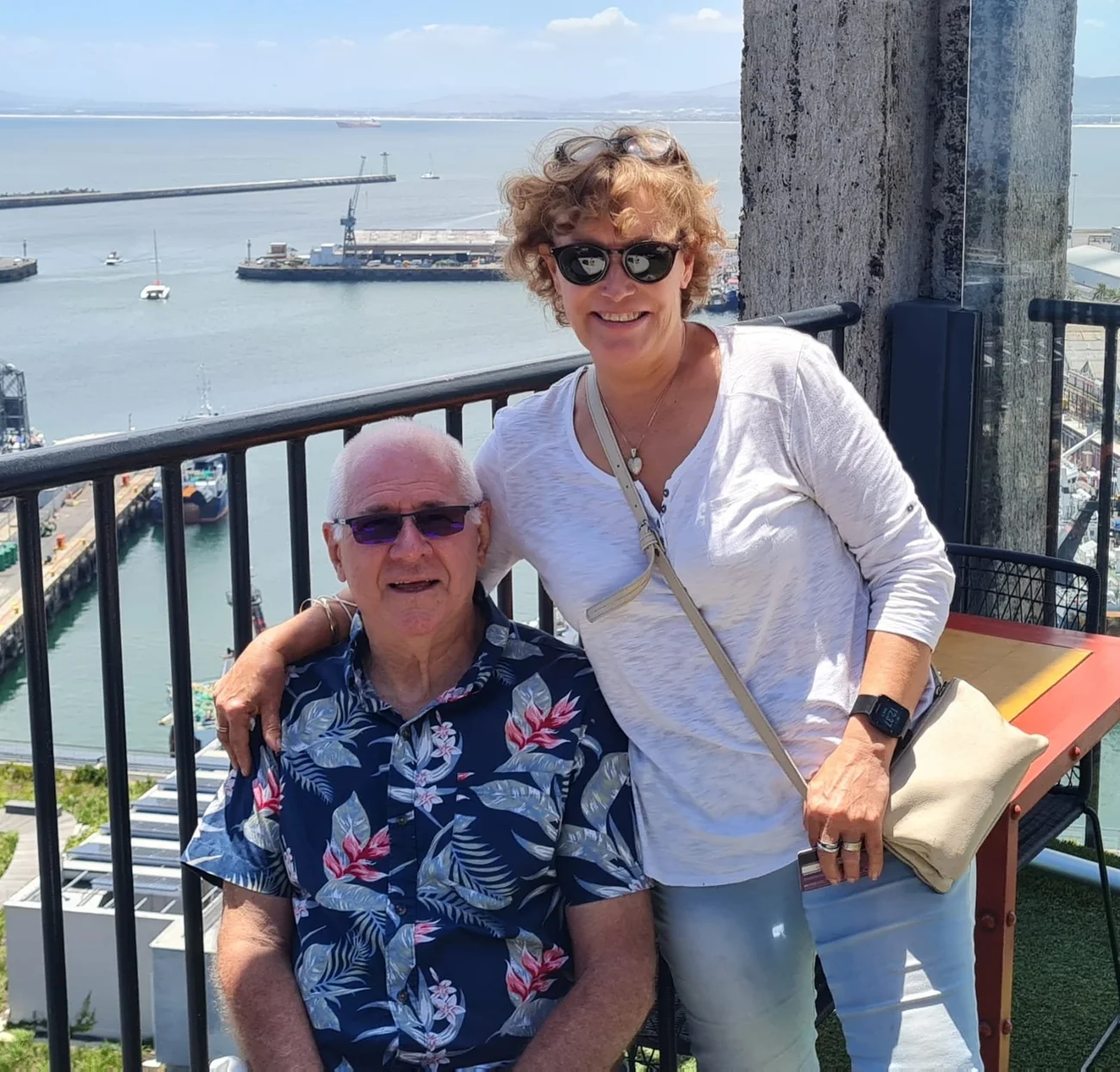
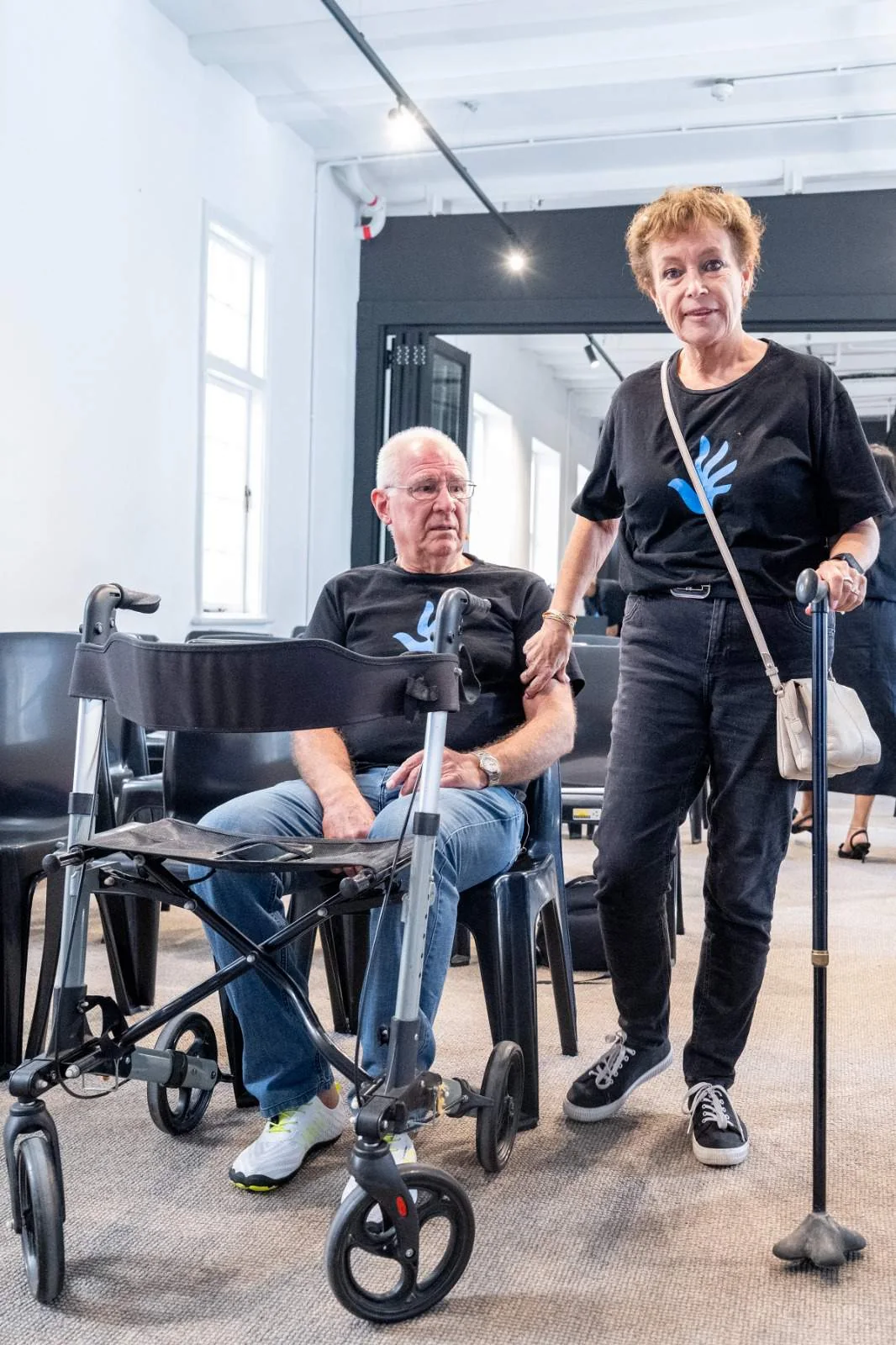
Dieter Harck and Lynne Grubb together overlooking Cape Town harbour.

Living case study

Dieter Harck

Dieter was diagnosed with Motor Neurone Disease in 2013. More than a decade later he is still living, still competent, and still asking why South African law denies him the choice he wants to keep open.

“…when my innermost fear of death is replaced by the fear to live, the point of no return has been reached.”

Dieter Harck

Dieter has joined DignitySA’s constitutional challenge so that his question is heard while he can still ask it himself.

Listen: Couple Courageous
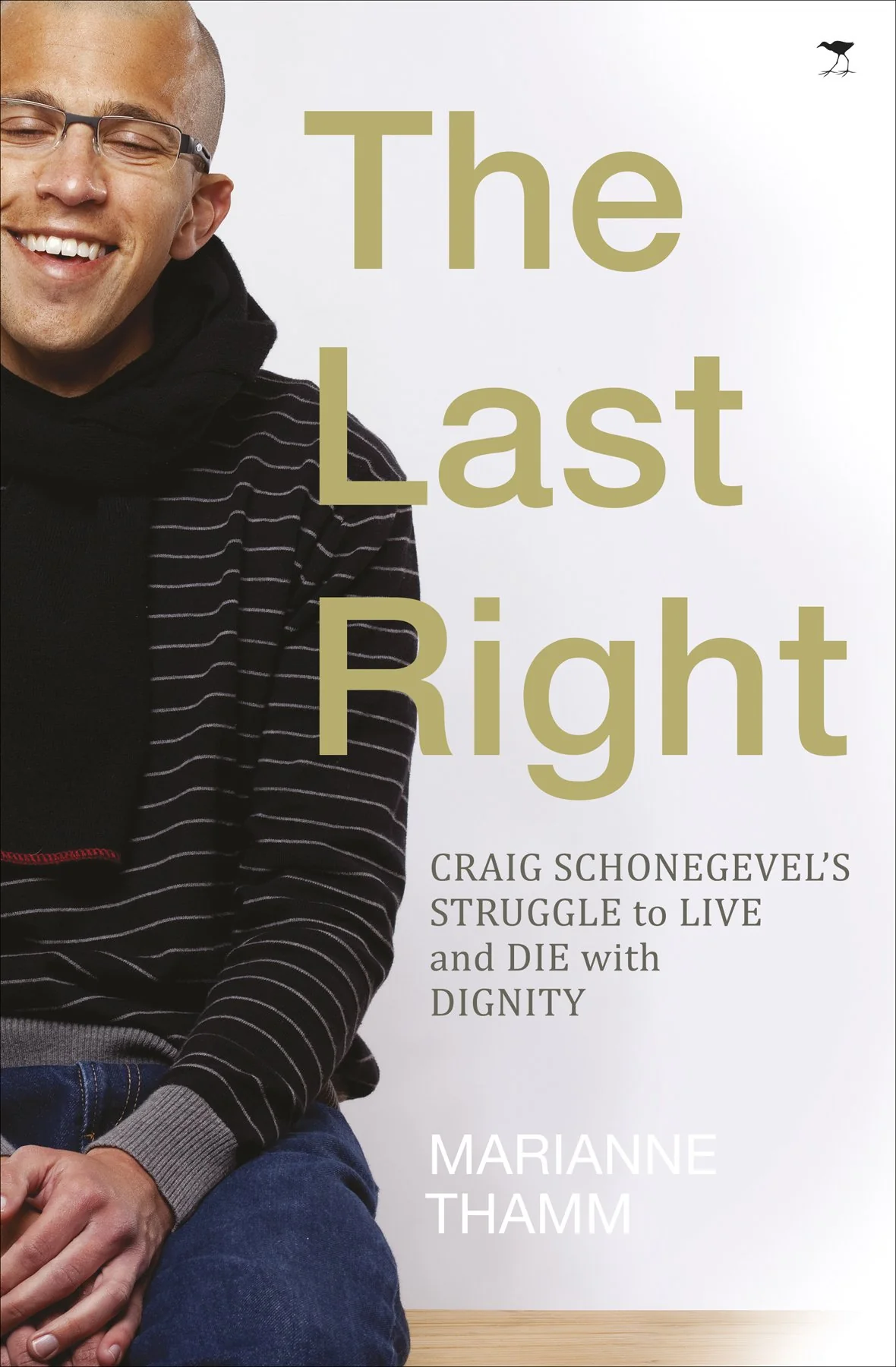
Book cover for The Last Right about Craig Schonegevel.

Family testimony

Craig Schonegevel

Craig lived with neurofibromatosis from infancy. By 28, after a lifetime of operations, fibromas, brain-tumour surgery and pain that medicine could no longer reach, he asked his parents to let him go.

“Even the strongest soldiers grow weak.”

Craig Schonegevel

South African law could not give Craig what he asked for. He died alone on 1 September 2009, not in his mother’s arms as he had wanted. His mother Patsy now tells his story so that the next family will not face the same wall.

Read Patsy’s story Court correspondence News article
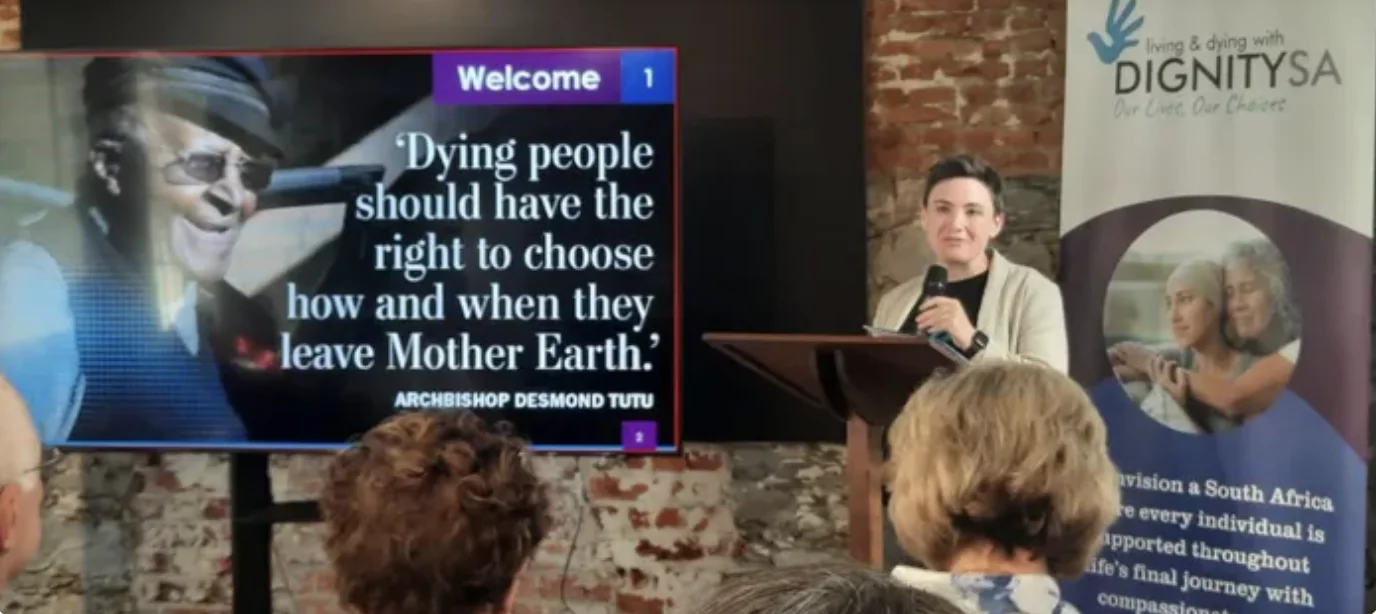
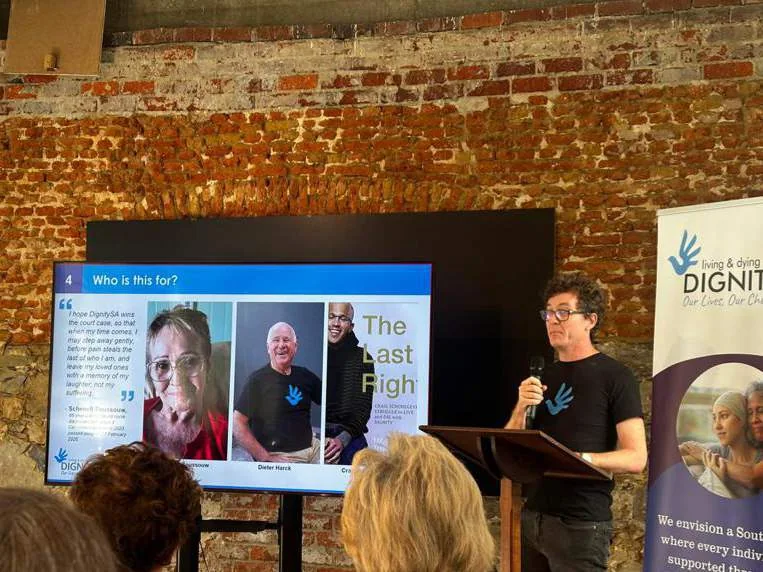
A DignitySA speaker at the MAiD case press conference with a projected Archbishop Desmond Tutu quote.
The constitutional challenge was launched publicly at the Desmond and Leah Tutu Legacy Foundation on 9 April 2026.

A public-interest case launched in public

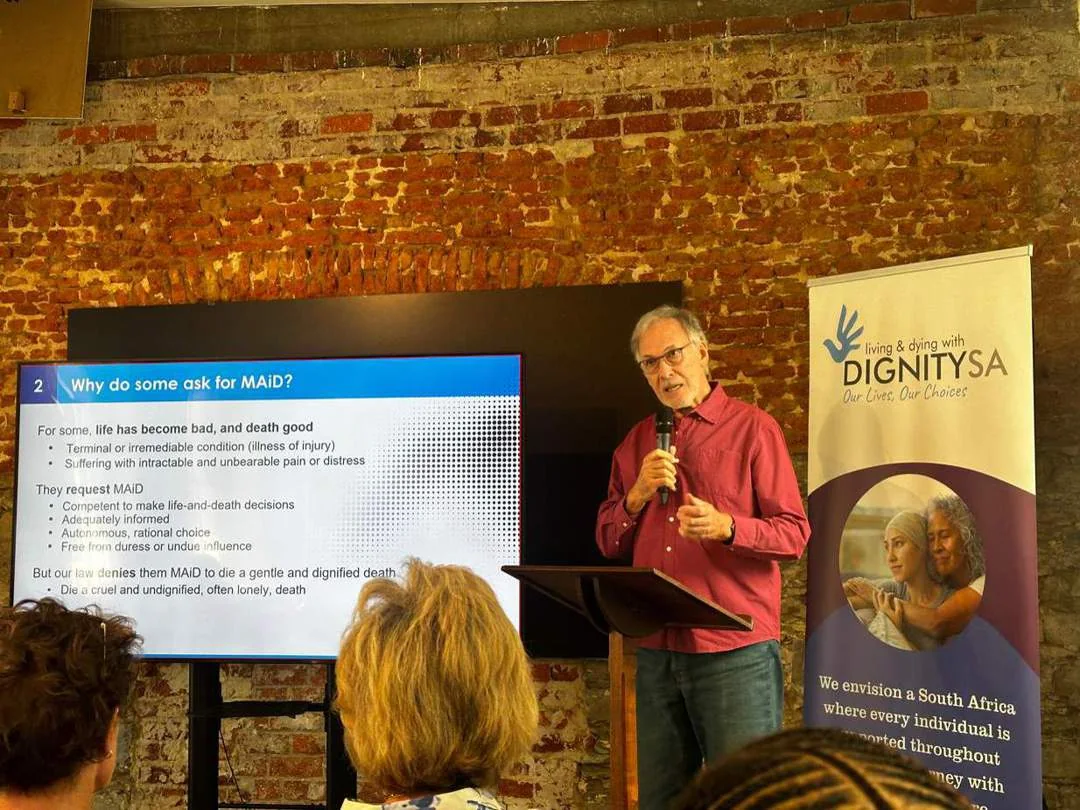
The press conference at the Desmond and Leah Tutu Legacy Foundation brought DignitySA’s legal, medical and advocacy arguments together with the lived experience of families and people facing serious illness.

The venue was deliberate. Archbishop Desmond Tutu publicly supported the principle that dying people should be able to choose how and when they leave this world, and DignitySA’s case carries that question into South African constitutional law.

See what the application asks for

What MAiD means

International terminology differs, but the core features are consistent: consent, capacity, medical assessment and safeguards.

Patient-initiated and voluntary

Medical assistance in dying is considered only after a competent person makes an informed, voluntary request. The request must come from the patient, not from family, clinicians or an institution.

Medical, assessed and documented

The request is assessed by healthcare professionals against strict legal criteria, with attention to diagnosis, prognosis, capacity, voluntariness, alternatives and safeguards.

A safeguarded end-of-life option

DignitySA is advocating for a carefully regulated option for people whose suffering cannot be acceptably relieved, while protecting vulnerable people from pressure or abuse.

Self-administered medical assistance in dying

A medical practitioner or authorised practitioner provides or prescribes the means, and the person takes the final step themselves.

Practitioner-administered medical assistance in dying

A medical practitioner or authorised practitioner administers the intervention at the person's explicit, informed and voluntary request.

The Constitutional Challenge

On 9 April 2026, DignitySA lodged an application concerning MAiD with the North Gauteng High Court in Pretoria. The application asks the court to declare the current blanket common-law prohibition unconstitutional, unlawful and invalid.

DignitySA asks that the declaration of invalidity be suspended for 24 months so that Parliament can bring the law on MAiD in line with the Constitution and craft legislation appropriate for South Africa.

The case concerns competent, informed persons with a terminal or irremediable condition whose suffering is unbearable or intolerable and cannot be alleviated by an acceptable treatment option.

Filed

9 April 2026

DignitySA lodged its MAiD application with the North Gauteng High Court in Pretoria.

Relief sought

Constitutional invalidity

The application asks the court to declare the blanket common-law prohibition unconstitutional, unlawful and invalid.

Parliament

24 months

DignitySA asks that Parliament be given 24 months to bring the law on MAiD in line with the Constitution.

Who the case concerns

Competent and informed persons

The proposed class is people with a terminal or irremediable condition causing unbearable or intolerable suffering.

Safeguards are central to the case

The case does not ask the court to ignore vulnerability. It asks for a regulated framework that protects vulnerable people while respecting the autonomy of those whose suffering has become intolerable.

Clear eligibility criteria based on competence, informed consent, voluntariness, diagnosis, prognosis and unbearable suffering.
Independent clinical assessment, with specialist or multidisciplinary input where the circumstances require it.
Documented discussion of alternatives, including palliative care, palliative sedation, refusal of treatment and advance care planning.
Repeated opportunities to withdraw the request, including immediately before any practitioner-administered provision.
Transparent reporting, oversight, training and review so that the system can be monitored and improved.
Respect for conscientious objection, paired with continuity of non-MAiD care and effective referral pathways.

South African expertise anchors the case

These local and foreign expert reports are part of DignitySA’s case submission. They support the court application with South African medical and bioethics evidence, and comparative evidence from countries where assisted dying is legally regulated.

Local expert report: South Africa

Prof Graham Fieggen Expert Report

  • Explains that South African clinicians already work within consent, capacity, second-opinion and documentation frameworks that are relevant to MAiD.
  • Recommends that any MAiD system be coordinated through designated public and private hospitals with palliative-care teams and ethics support.
  • Warns that MAiD must be paired with funded palliative-care expansion, so it never appears easier or cheaper than building equitable care.
Read report

Local expert report: South Africa

Prof Keymanthri Moodley Expert Report

  • Brings South African bioethics expertise to questions of capacity, consent, voluntariness and high-stakes clinical decision-making.
  • Links MAiD safeguards to existing health-law principles designed to protect human rights, safety, equity and fairness.
  • Notes that South Africa already manages other legally regulated health scenarios where strict guardrails are required.
Read report

How MAiD relates to palliative care

Prof Fieggen's report is especially useful here. It treats palliative care as a necessary partner to any future MAiD framework, not as a substitute for it. His report recommends that MAiD be connected to funded palliative-care expansion, palliative-care verification and hospital-based ethics support.

Open the Fieggen Expert Report

Foreign expert reports

Colombia

Evidence from an upper-middle-income country with hospital committee models and strict eligibility criteria, relevant to South African context-setting.

Court application library

The filed documents are public. They have been grouped here so that readers can find the core application, supporting evidence, local expert reports and foreign expert reports without wading through a single combined bundle.

Foreign expert reports

Comparative expert evidence filed with the application, drawing on jurisdictions where assisted dying is lawful and regulated.

What DignitySA can and cannot do now

While MAiD remains unlawful, DignitySA cannot help anyone end their life. We can, however, walk you through every lawful end-of-life choice already available in South Africa, and share what is happening with the constitutional challenge.

If someone is overwhelmed, depressed or in immediate danger, please seek urgent support from a clinician, emergency service or crisis helpline.

South Africa is part of a wider global conversation

Assisted dying frameworks now exist in a range of jurisdictions, each with its own eligibility rules, oversight mechanisms and clinical practice. DignitySA's case draws on this comparative evidence while asking what is suitable for South African law, health-system realities and constitutional values.

World Federation of Right to Die Societies member badge

A member of the World Federation

DignitySA is a member of the World Federation of Right to Die Societies, an international network of organisations working to advance choice and dignity at the end of life.

Visit the World Federation

Help fund the constitutional challenge

This case belongs to anyone who has ever watched a loved one ask for a choice the law would not give. Public support keeps the legal work moving.