Loving each other enough to let go
How shall we speak theologically about medically assisted death and dying? What kind of faith language, what kind of spiritual vocabulary, can carry or host the conversation about medically assisted dying in South Africa – including in churches?
The Christian faith tradition does not always offer positive or affirming ways of speaking about medically assisted dying, as we well know. Death is anything but morally neutral ground in the tradition and in the Bible; typically associated with heavy language like ‘the wages of sin’ and ‘the judgment of God’. Untangling our speaking of death and dying from sin-talk, judgment-talk, and curse-talk is notoriously difficult (and some would say impossible). Perhaps it is no wonder that many people of faith struggle, even before faced with the conversation about medically assisted dying, just to wrap their heads around death. The options for speaking about death and dying is skewed in favour of the negative.
A far more clearly articulated commitment is found to life: life as a gift and God as the giver of life. Far more attention is paid to what some theologians call ‘the positive’: theologies of life and living, of health and well-being, of human flourishing. Theologies of death are closely associated with ‘the negative’, and thereby all that is life-denying, violent, and violating. The problem is therefore not only a language problem – it is also an imagination problem. Our framing of death and dying is not a stand-alone endeavor. It is embedded in our capacity to make sense of ourselves and others and the world around us. For people of faith, this means that we need to figure out what we are, who we are, and how we should be within a bigger story of God that relates to all that is not God.
Even so, this also does not mean that there are no affirmative or constructive options for speaking about death and dying from the Christian faith tradition. The Dutch Catholic theologian Henri Nouwen would offer a series of meditations on death and dying wherein he explores alternative Christian approaches to speaking about death and dying – including befriending death, dying well, dying a good death, and giving each other the gift of a good death. One wonderfully imaginative option for our speaking has been offered by South African Reformed theologian Tanya van Wyk, who suggests that we do our speaking from our understanding of God as the Triune God that ‘cedes space’.
In the crucifixion accounts we encounter the God who dies – the God of life who cedes space to the death and dying Son, Jesus Christ, whose death takes place within the depths of Godself. God ‘holds’ Christ in dying, and thereby – out of hospitality, love, and care – cedes life to death. There is space in the divine communion for death. Death holds no threat for God. Room is made for death and dying. Yet this is not all that Christians confess. God does not only make room for death and dying; God also holds us in our death and dying. Reformed Christians confess (through the Heidelberg Cathechism) that we belong to Jesus Christ not only in our life and living, but also in our death and dying.
This means that however we die, in whatever manner, God holds us. We are, in the words of Belgian theologian Heiko Oberman – writing this as he himself was dying of cancer – passed from the one hand of God to the other. Within this divine holding, there is no kind of dying that is unwelcome. This is the good news of the gospel: God holds us, no matter what. God holding us does not depend on us. Our comfort or consolation lies therein that in our death and dying – whether through medically assisted dying, or not – we are held.
The American Reformed theologian David Kelsey argues that the only way in which we can flourish is as dying life. We live and flourish on borrowed breath or not at all. Our human bodies – that we are, but also that we receive as gifts – are fragile and therefore prone to what he calls ‘degrees of disintegration’. The ultimate degree of our bodily disintegration is death. If our flourishing is not exclusive of our death and dying, this means that we are freed from bio-anxiety: making life absolute, making life its own goal (Dietrich Bonhoeffer), and thereby pursuing life and living unreservedly and at all costs. Making room for death and dying in our flourishing does not mean romanticizing death. As the German theologian Karl Barth reminds us, death can only be faced with sorrow.
But death can also be faced with love. In the end, our human flourishing also asks something of us: namely, that we make space for others’ flourishing, by being a blessing to our (contemporary and future) neighbours. We make room for the flourishing and well-being of others by not only acting in our own interests. After all, we flourish together or not at all. We can only flourish if others (also) flourish. This means that we can also make space for those who seek assistance in dying. As a last act of love and care toward those whose bodies have disintegrated significantly – who are saturated with trauma, illness, and suffering – we have the opportunity not only to make room for a more dignified death, but to also offer a last investment in their human flourishing as dying lives.
In the poem “a longing – desperate and endless”, South African poet Antjie Krog writes movingly about her mother’s death, and ultimately the importance of letting go:
to truly live is to love that which is mortal
with your heart and your kidneys, with the breath in your nose
with the essence of your tongue…
and, when the time comes to let the beloved body go
to let it go
The Christian faith tradition has far more to offer than an easy and simplistic ‘no’ to the question of medically assisted dying. Perhaps we too – out of a concern for one another’s human flourishing – can learn to ‘let go’. Giving each other the space to let go is also love.
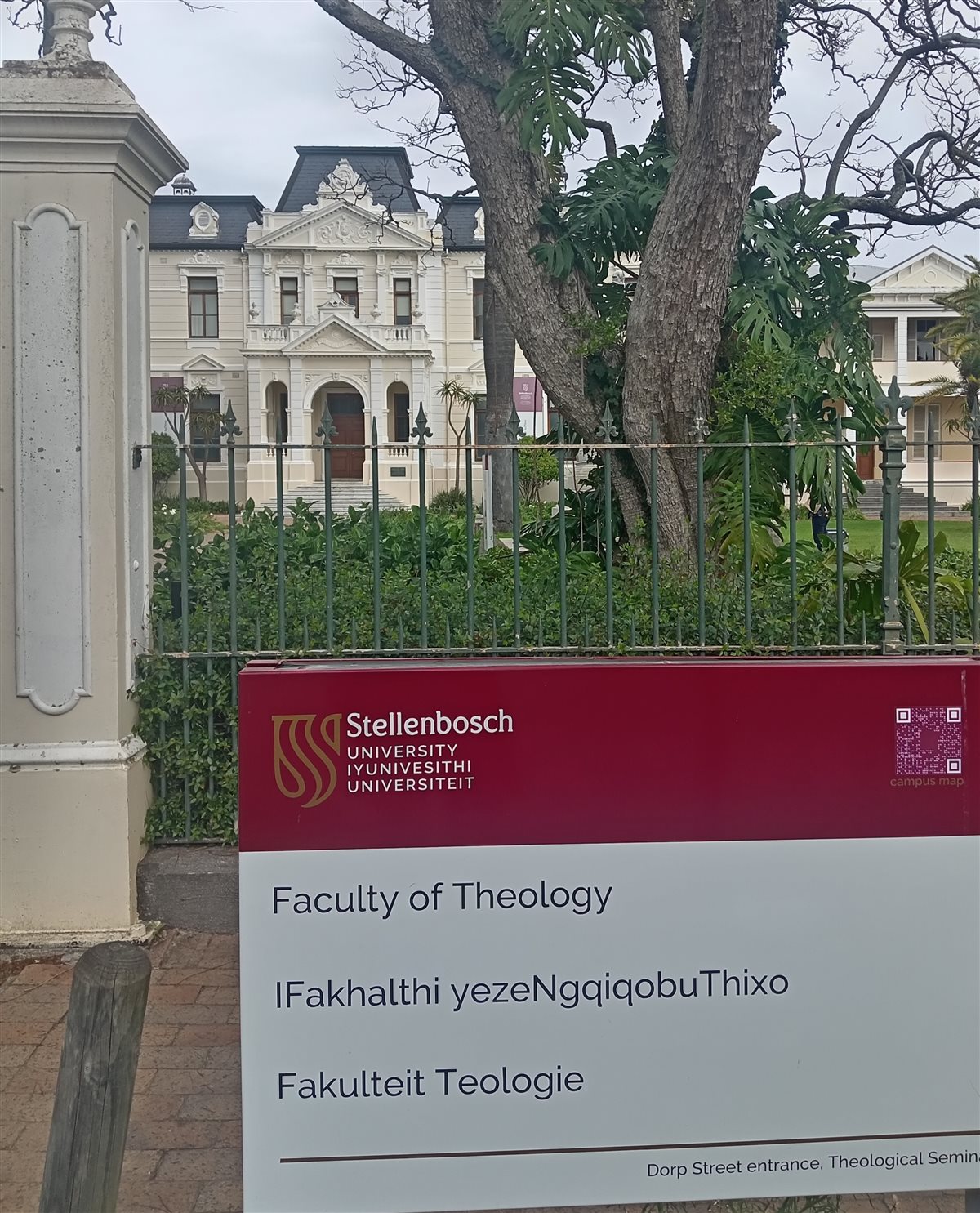
These are the courageous reflections of Professor Nadia Mason who, together with the Cape Synod of the Dutch Reformed Church, hosted a seminar on the 2nd of October 2026 at the University of Stellenbosch’s Faculty of Theology that explored interdisciplinary perspectives on assisted death and dying. Prof Nadia Mason teaches Systematic Theology in the Faculty of Theology at Stellenbosch University and is an ordained minister of the Dutch Reformed Church. A Mandela Rhodes Scholar, she writes on human and ecological flourishing. She has been a visiting scholar at Princeton Theological Seminary and a fellow at the Center of Theological Inquiry.