Vuya’s Story
How losing both my parents changed the course of my life.
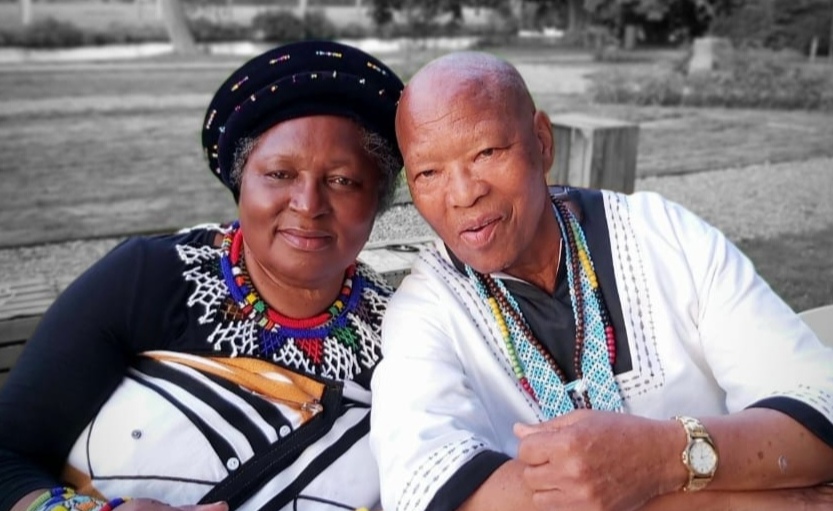
The 22nd December 2020 is the day my life changed forever. It was the day my mother, Nompumelelo Kabanyane, passed away. People often say that life changes after losing someone you love. Mine didn’t just change. It split into two distinct chapters: before and after.
Twenty days later, on 12th January 2021, my father, Tommy Kabanyane, also passed away.
Both death certificates list pneumonia as the cause of death, brought on by complications from COVID-19. Losing one parent felt unimaginable. Losing both within three weeks of each other is something I still struggle to put into words.
By the time we cremated my father, I was emotionally numb. I remember sitting in church while people shared stories about the man he was. Their words drifted in and out, but all I could hear in my own mind was one sentence: “I am an orphan.”
In that moment, I felt untethered. It was as though someone had pulled up the anchor that had kept me steady all my life, leaving me to be tossed about by a violent storm with no sense of direction.
My parents were wonderful people. They were far from perfect, but they loved us deeply, and my three siblings and I were incredibly fortunate to call them ours.
My mother taught me kindness. She taught me how to drive a car. She taught me generosity and compassion. She taught me that love is something to be shared generously and never taken for granted. She took me to the first theatre production I ever saw, introduced me to classical music, and quietly expanded my world. She had a strict exterior that kept us in line, but beneath it was a bit of a hippie.
My father gave me a different set of gifts. He taught me to treasure books, to save and invest wisely, to change a car tyre, and to take care of the things that mattered. He also taught me the joy of laughing until I cried when something was truly funny. He was the roof over our lives. We rarely noticed it because he carried that responsibility so quietly, but everything felt safer because he was there.
Together, they taught me something even greater: to live authentically and to pursue the life that felt true to me, even if it meant changing direction. They both lived that lesson themselves. They began their careers as teachers. Later, my father followed his calling and became a Methodist church minister, while my mother fulfilled her dream of becoming an educational psychologist. Watching them reinvent themselves taught me that it is never too late to answer your calling.
I was so deep in grief after they died that much of 2021 is a blur. COVID-19 had left loss everywhere. Every time the phone rang, I braced myself for news that someone else had died. In July 2021 alone, five people I knew passed away. There was barely time to process one loss before another arrived. Grief was no longer something that had happened to me. It seemed to be everywhere I looked. Friends were grieving. Families were grieving. Entire communities were grieving. Death had moved from being a distant reality to an ever-present part of life.
What stayed with me most after the pandemic was how quickly the world seemed to return to normal. Life moved on so swiftly, yet so many families were still trying to understand how their worlds had fallen apart. Part of me struggled with that. It felt as though something so catastrophic should have changed us all forever.
But there was one thought that haunted me more than any other. Neither of my parents died with someone they loved beside them. COVID restrictions meant we couldn’t visit them in hospital. I couldn’t hold their hands and tell them one last time that I loved them. That heartbreak has never completely left me.
Somewhere in my grief, I stopped asking, “Why did this happen?” and started asking different questions: “Why are we so emotionally unprepared when death arrives? How do we make sure no one feels alone when they are dying or grieving? Why do we struggle to know what to say to people who are hurting? Why are we so uncomfortable being in the presence of those who have lost a loved one?”
The more I reflected on these questions, the more I realised that my grief wasn’t only about what I had lost. It was also about what had been missing. No one should have to face death alone. No family should have to navigate profound loss without support.
I couldn’t change what happened to my parents. But I could become the kind of person I wish had been there for them. That thought changed the direction of my life. I trained as a death doula.
I wanted to be the person who could sit beside someone in their final hours. I wanted to hold a hand when family members couldn’t. I wanted to help create the kind of compassionate presence I wish my own parents had been able to experience.
The training gave me a different way of carrying my grief. It didn’t remove it, but it gave it somewhere to go. It helped me understand that acknowledging death doesn’t diminish life; it deepens it. It has made me cherish the people around me more deeply and become more aware that the ordinary moments we often overlook are, in fact, extraordinary.
My parents’ deaths did not give my life purpose, but the loss revealed a purpose that had been quietly waiting for me all along.
Since losing my parents, I have been on what I can only describe as a journey of caring for my soul. After training as a death doula, I became an Advisory Trustee of Dignity SA and later one of its directors. I completed my counselling training with Lifeline Johannesburg and also became a facilitator with GriefShare. Looking back now, I can see that each step was about more than what I was learning or becoming. It was another step in my own healing, and another way of walking alongside people facing some of life’s hardest moments.
I still miss my parents every single day. I still talk to my mother when life feels overwhelming or when I’m excited about something. Every now and then, I catch the unmistakable scent of my father and, for a brief moment, I feel as though he’s giving me one of his wonderfully awkward hugs. He was never much of a hugger, but my siblings and I insisted on hugging him anyway, and he’d return the embrace in his own slightly stiff, endearing way. Thinking of those hugs still warms my heart.
I no longer feel like the tumbleweed I once was, being blown aimlessly through the desert. There is steadiness now. Not because the grief has gone, but because I have learnt quiet acceptance.
Sometimes I think about who I was before 22 December 2020. I laughed more easily. I moved through life believing the people I loved would always be there. I felt safe inside the cocoon of my family’s love and continued, unbothered, in the ordinary rhythm of family life.
I’m different now. I know that heartbreak can arrive without warning. I know that terrible things sometimes happen to good people. I know that sometimes we pray with all our hearts for healing, and God’s answer is still, “No.”
And yet, strangely, I find myself less afraid than I once was. I no longer see death as the enemy I believed it to be. I still get ambushed by grief sometimes. I still wish my parents were here. But I have come to understand that death is part of every human story. It is not something we need to be afraid of or obsess over, nor something we should avoid speaking about. When we acknowledge its place in life, we begin to love more intentionally, forgive more freely, and stop assuming we have endless tomorrows.
I cannot change the way my parents died. If I could, I would hold their hands and tell them one last time how deeply they were loved. Instead, I can choose what I do with the life they helped shape.
Every grieving person I sit beside, every difficult conversation I hold space for, and every opportunity I have to bring comfort where there is fear is, in some small way, an extension of the love my parents first gave me. They taught me how to live and love. Through losing them, they also taught me how to accompany others through death and grief. I can think of no greater way to honour their lives than to spend mine passing on the love they so generously gave to me.
This story was shared with us by Vuya Kabanyane Ilengou who joined DignitySA’s board in 2025. This Women’s Month we are sharing the stories that shaped the lives of the female leaders of DignitySA and we would love to hear yours. Please send us an email with your story to [email protected]