

From the Chairperson's Desk
In a world, and a country, so keenly aware of what divides us, death is the great leveller. It humbles us all and reminds us of what matters most. If you are reading this, you probably believe, as I do, that we need to bring death, dying and grief into the open and talk about them. That is the spirit of this edition, Sharing Our Stories, which has a strong South African flavour.
In our Exit Interview, we speak with writer Bongani Kona. He is the editor of Our Ghosts Were Once People: Stories on Death and Dying, which Linda Ravenhill reviews in Good Reads. For Popcorn Time, we revisit Dawid van der Merwe’s piece on This Is Not a Burial, It’s a Resurrection, a little-known Southern African film. Prof Tanya van Wyk, Head of Systematic and Historical Theology at the University of Pretoria, bravely provides our Expert Input in this edition, which closes out with a poem from our Operations Manager, Leigh Meinert.
Different as these voices are, each one helps us talk more openly about death. I hope you find much here that resonates, and that it connects you with the best of who South Africans can be: courageous, generous, authentic and dignified.
Together we have achieved a great deal in 2026. Most notably, we lodged our constitutional challenge seeking the decriminalisation of medical assistance in dying. Our petition has 5,437 signatures, and more than 50 people across six provinces have trained with us as Ambassadors.
We are especially proud of our newest offering, the Dignity Navigator, an online tool that helps South Africans plan ahead and get their affairs in order. If you haven’t tried it yet, your first 30 days are free at www.dignitynavigator.org.
To keep up this momentum and put DignitySA on a sustainable footing, we need your help. You could give a loved one full access to the Navigator as an end-of-year gift, or make a donation to DignitySA. We can offer 18A tax certificates for all donations and, if our cause is close to your heart, perhaps you will consider leaving a bequest to DignitySA in your Will.
In a year that has often divided us, I have been heartened by how much we share. We are grateful for your support and look forward to growing this community of compassion with you in 2027.
As another year draws to a close, may you find time for what matters most, including rest, and the people you love.
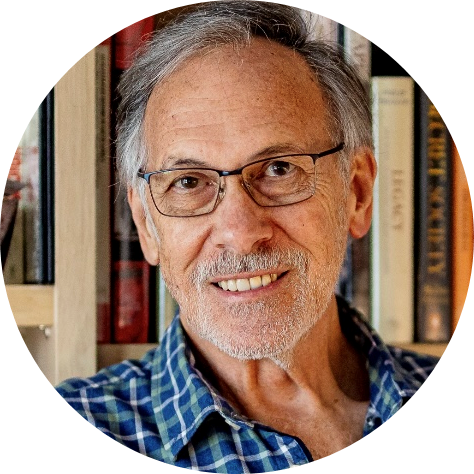
Prof Willem Landman
Chairperson, DignitySA
Willem is DignitySA's Chair and Co-founder, and holds degrees in philosophy, political philosophy, theology and law from the Universities of Stellenbosch, Oxford (as a Rhodes Scholar) and Unisa. He has chaired philosophy departments in South Africa and held a chair in Medical Humanities in the United States. He is the founding CEO of the Ethics Institute of South Africa and a co-founder of the international journal Developing World Bioethics. You can read more about DignitySA’s leadership here.
The Exit Interview
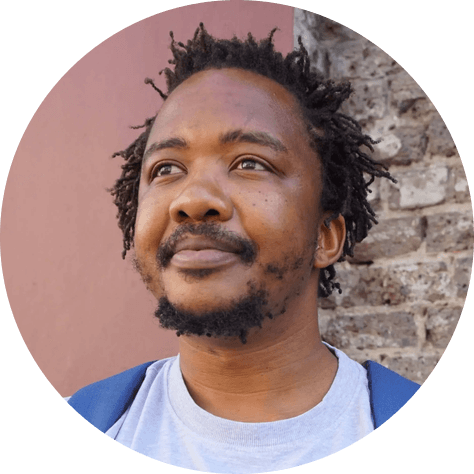
Dignity Matters poses some questions to:
Bongani Kona is a writer who lectures in the Department of Historical Studies at the University of the Western Cape and edited Our Ghosts Were Once People: Stories on Death and Dying (2021).
If calories and indigestion were no object, what culinary indulgence would be your last?
A few friends and I had this conversation a couple of weeks ago and my answer then was pap en vleis. Aside from pap en vleis being a childhood favourite, I like it in stories when there’s a connection between beginnings and endings.
Ideally, how would you like to go?
Surrounded by loved ones and with nothing left unsaid or unforgiven.
In what publication would your obituary appear, and what would its glorious and slightly exaggerated but still truthful headline be?
Not that I’ll be around to read it, but it would be awesome to have an elegy written by a friend or partner or someone who has observed your life closely, rather than an obituary in the paper.
Imagine your memorial service. What music would be playing? What band or artist would be grateful for the opportunity to perform?
I have not thought at all about this but I’m picking up that I have a thing about closure and resolution. I’m not sure I care too deeply about the kind of music, and besides, I won’t be able to hear it. Funerals are for the living and what would help you to move forward after the loss of someone dear? For me, being able to tell a story about what a particular person has meant to you and to hear what they’ve meant to others can be very healing.
Burial or cremation? If transport, permissions and expense were no problem, where would you like to be buried, or have your ashes scattered?
Please don’t hold me to any of this. I might change my mind tomorrow! For today, I’d prefer to be cremated and have my ashes scattered in the sea.
If you could choose one object to be buried or cremated with, what would it be and why?
A big part of this, for me at least, is about letting go.
If you were to haunt someone after your demise, where would it be and why?
Ha! I want to say see my answer above. But on a serious note, letting go of hurt is an important thing for me.
Who is in your Will? And is there anything that you are leaving that may cause a fight?
Oh geez, I need to get organised about this! Long story but I will get my affairs in order, as they say, before this goes to print. Promise.
What do you still need to do before you kick the bucket?
Great question. Tomorrow or next week, I might have a different answer for you but at this moment, there are difficult conversations with myself and with loved ones that I need to have. These are conversations I’ve avoided for years but the hard things are always worth saying.
Finally, is there anything you've secretly wondered about death, but been too polite to ask?
Nope.
Expert Input

Re-thinking how God’s providence enters the discussion about Medical Assistance in Dying
Prof van Wyk is an ordained minister in the Netherdutch Reformed Church of Africa and the Head of Department of Systematic and Historical Theology at the University of Pretoria. She is a research fellow with Harvard Divinity School’s Institute for Peace Studies in Eastern Christianity and in 2024 she was the first woman to be elected as the Chairperson of the Theological Society of South Africa.
DignitySA invited her to share her reflections after she attended a recent consultation about interdisciplinary perspectives on (assisted) death and dying at the University of Stellenbosch’s Faculty of Theology.
Theologians are often regarded as indecisive. We talk a long time before we make decisions, we reconsider our decisions, we request further research before we make decisions, and we almost never give “answers”. It can be frustrating, I know. From the outside, it looks like we want to theologise and philosophise and stick to an abstract realm where the real problems of mortals don’t feature. I get that. I have sat in many church council meetings, synod meetings, academic meetings and conferences and scratched my head about some of the approaches. I am someone who prefers to think and to re-think, to ask for informed opinions, and to consider the broader context and paradigm (so it takes me a while, too). When it comes to God-talk, I am sometimes overly cautious. Trying to put words to the mystery of God (I am a Christian theologian) is a daunting task. This task should be accompanied by humility, inclusivity and responsibility. Therefore, when God and God’s providence enter into conversations about medical assistance in dying/ medically assisted dying/ euthanasia, I am sometimes worried.
Trying to discern absolute guidelines and answers about what theology says and does not say about God, life and death is a challenge, and in my opinion, precarious. This was clear once more during a recent consultation I attended regarding interdisciplinary perspectives on (assisted) death and dying, at the Faculty of Theology, Stellenbosch University on 2 October 2026, in partnership with DignitySA.
Thinking about death and dying has always been existentially important to me. As I write here, I am the only one left of my immediate family: my parents and younger brother have all passed away in the last decade (my mother last year, 2025). There are no “next of kin” left to me from within this immediate circle. When I have to update my will, the consultants and lawyers don’t understand when I tell them: there is no direct family. It implies I had to think about death, dying, and embracing one’s finitude on three occasions in 10 years. I have seen some of my people suffer: pain, poverty and worry about special care needs and costs after hospitalisation. I have witnessed how – in South Africa – we don’t have a specialised infrastructure to help people age with dignity. This is a privilege reserved for the very rich.
All of this implies that engaging with the reality of death, thinking about my own finitude and having to plan for this extensively are vitally important to me. It is why I attend all the consultations and discussions I possibly can that relate to death, dying and dignity.
I grew up with the idea that death is “evil” and something from which you should run away. This in part comes from a specific type of Christian theology that I was exposed to at a young age. In addition, from a theological or religious perspective, concepts and confessions about God’s control over life and death, God’s will, the nature of God’s grace and mercy, and God’s compassion, frequently enter into any conversation about death, dying and dignity. Sometimes it helps the conversation. Sometimes it complicates it (this is not “bad”). Sometimes, it unfortunately creates an impression of a God that holds humanity in an iron fist and who will bestow mercy when so requested. I take issue with that.
I am worried whether God’s “providence” about life and death (and God’s power/ control over it) is equally important when decisions are made to create life: to bring children into a world that is fraught with polarisation, diminishing resources, and a lack of financial planning on the part of parents who bring said children into the world. I am worried that God’s providence implies that God must graciously, in God’s own time, heal or help someone in existential pain, suffering and indignity.
From the other side, I would argue that the Latin word, misericordia, which literally implies the “distress” or “wrenching” of the heart, is closer to what the history of interpretation about God’s nature indicates: a God that suffers with humanity, and whose Heart wrenches in compassion with those who suffer the effects of an imperfect and broken human condition. (I know all the theological counter-arguments to this, but when it comes to death and dying, I wonder if those arguments can stand up to an existential reality).
The October consultation yielded multiple perspectives about death, dying and dignity and re-emphasised why a multi-layered and multi-disciplined approach to the reality of death and dying is vitally important. The importance of the work of DignitySA cannot be emphasised enough. They are our collective reminder and conscience to “trust in God, but lock your car”. This phrase I got many years ago from one of those feel-good life-lists people send around via WhatsApp. It stood out to me, because it indicates that a trust in or commitment to God’s providence does not imply burying our heads in the sand, nor does it imply our intellectual labour should be side-lined or diminished, when it comes to matters of faith, death, dying and dignity.
In this regard, God’s providence – walking with us in life and in death – for me, at least, implies the moral imperative to walk with DignitySA on their journey to legalise Medical Assistance in Dying (MAiD).
Prof Dr Tanya van Wyk
University of Pretoria
On the Lighter Side
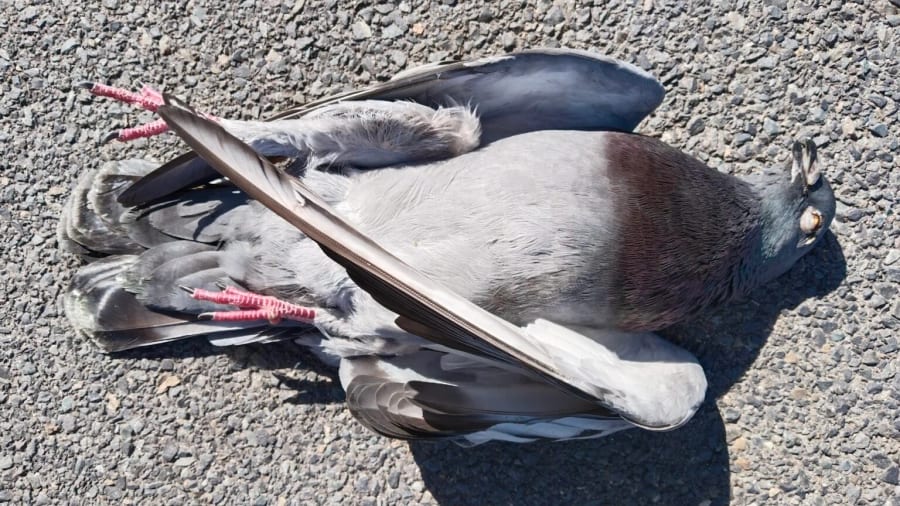
Moved by a sad but all-too-frequent sight that many might pass by, Sean O’Connor, the host of our podcast series A Way To Go, was stirred to write his first obirdtuary for the late great Henry Pigeon.
I’ve prepared a little speech in the case of my accidental death, which has now, unfortunately, transpired.
My name’s unpronounceable in Coo, but you can call me Henry. That’s what my friends called me. Or did. My flying days are over.
This might come as a surprise to you, but we’re not all the same, us grey suburban birds. You might see us simply as ‘pigeons’ or ‘a pigeon.’ I understand. But it’s wrong. Still. I’ve let it go. I’ve let a lot go, actually. But was I ready to die?
Yes and no.
Sean is a grief and loss counsellor and end-of-life companion. You can find him at shapeofchange.co.za.
Popcorn Time
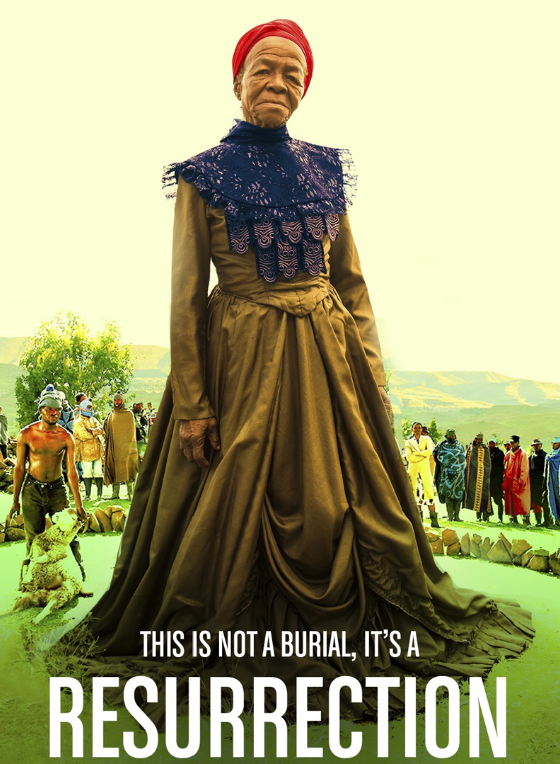
REVIEW:
"This Is Not a Burial, It’s a Resurrection" (2019)
by Lemohang Jeremiah Mosese
Reviewed by: Dawid van der Merwe
Rating: ★★★★½
What does it mean to die well when even your death is not your own?
In This Is Not a Burial, It’s a Resurrection, Lesotho’s acclaimed filmmaker Lemohang Jeremiah Mosese gives us Mantoa, an eighty-year-old widow who has buried her husband and children and longs only for her final rest. Mary Twala’s haunting performance captures a woman who seeks dignity not in grand gestures but in the quiet right to choose her own ending: to be laid to rest among her ancestors, in the soil that has carried her life.
That wish is denied. A government dam threatens to wash away her village and the graves of her kin. Mantoa’s grief hardens into resistance, and her personal mourning becomes a communal defiance. The film’s stark landscapes and silences turn loss into poetry, reminding us that death is not the enemy. The true enemy is the stripping away of choice.
For South Africans, this story resonates deeply. Mantoa’s struggle mirrors our own: the fight to have our voices heard in life’s final chapter. At DignitySA, we believe that to die well is to die on our terms, with autonomy, compassion, and respect.
This Is Not a Burial, It’s a Resurrection is more than a film. It is a call to honour the small but profound wishes of those at the end of life. Dignity is not granted, it is a right, and one worth defending until the last breath.
The film is available on DVD and Blu-ray from the Criterion Collection.
This review first appeared in Dignity Matters Vol. 3, September 2025.
Good Reads
REVIEW:
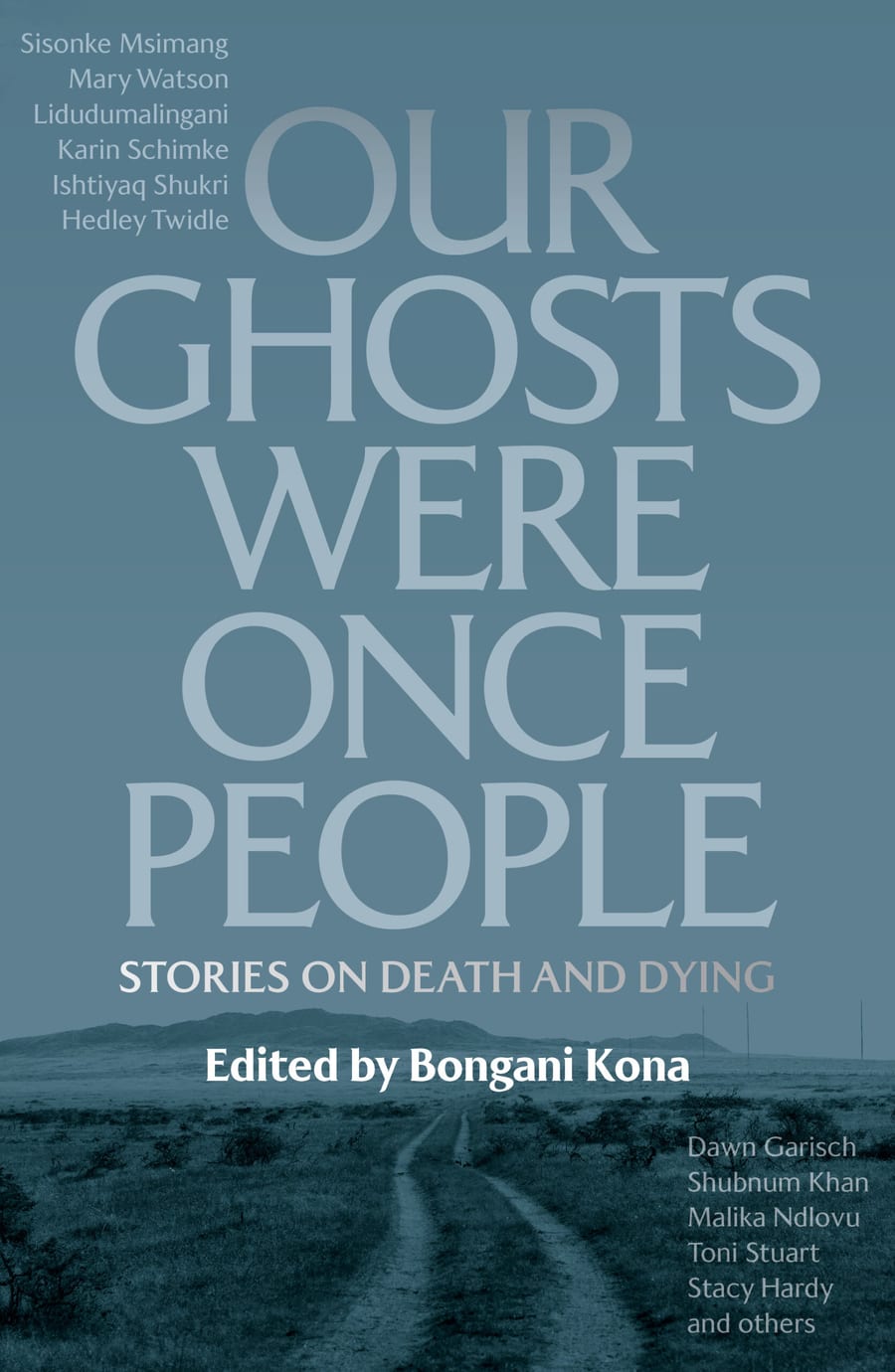
"Our Ghosts Were Once People: Stories on Death and Dying" (Jonathan Ball Publishers, 2021)
edited by Bongani Kona
Reviewed by: Linda Ravenhill
Rating: ★★★★★
This month, I had the immense pleasure of revisiting Our Ghosts Were Once People: Stories on Death and Dying, an anthology I have returned to often since its publication in 2021.
Bringing together thirty-eight diverse voices in a series of short stories, poems and images, Bongani Kona, a Zimbabwean-born writer and editor, and co-curator of the wonderfully titled Archive of Forgetfulness, has assembled a deeply human exploration of what it means to live, love and lose.
It is a book that will, at times, comfort you, disturb you and surprise you.
The collection takes its title from Jesmyn Ward’s memoir, Men We Reaped, in which she writes of the pain of recounting loss: “To say this is difficult is an understatement; telling this story is the hardest thing I’ve ever done. But my ghosts were once people, and I cannot forget that.”
In a society where death and grieving are often tidied away for the sake of expediency, and where the rituals of remembrance that once served us so well are increasingly considered unnecessary, finding the time and space to reflect on our losses can be difficult. Eventually, compassion fades, and we retreat into ourselves, carrying our ghosts with us.
Storytelling – sharing our experiences and thoughts about death, grief and our own mortality – is perhaps one of the most powerful ways we have of reclaiming that space. For in telling our stories, we make sense of the lives we have lived, the losses we have endured and the experiences that shape us – not only for ourselves, but for others navigating similar paths. It is, in many ways, our last bastion against forgetting.
The collection is remarkable in both its scope and diversity, taking us on an emotional journey from curiosity to discomfort, horror to heartbreak, and, ultimately, to hope.
Mary Watson’s Neither Here nor There explores the impact of COVID-19 and, more painfully, how travel restrictions during that time made it impossible for people to be with loved ones in their final moments. It captures the trauma of that separation and the lasting pain of not being there when someone you love dies. This story will resonate with many in South Africa, where distance, borders, inequality and circumstance separate families at precisely the moment they need one another most.
In Spiralling, Malika Ndlovu writes of losing her baby girl, stillborn at seven months, and the enduring pain of that loss. There is something profoundly beautiful in the way her daughter is remembered and remains part of the family story. Malika’s account reminds us how society often places little value on grief for a life that was never afforded the opportunity to be fully lived, as though the absence of tangible memories somehow diminishes the magnitude of the loss.
Our painful past – and present – as a country are also reflected throughout the book. In that sense, the collection reads, at times, almost as an act of activism: a refusal to allow people, histories and tragedies to disappear into silence.
In Investigation Pieces, Madeleine Fullard of the National Prosecuting Authority’s Missing Persons Task Team traces the fate of those who disappeared during apartheid, seeking to recover their remains and restore some measure of truth to the families left behind. It is a deeply moving reminder of the pain of being denied a grave, a place to mourn or the answers that might bring some measure of peace.
In Bongani’s own story, The Descendants, he recounts the senseless, violent death of his grandfather during one of Zimbabwe’s darkest periods. This story broke my heart. The love between his grandparents, the instinctive desire to protect those we love, and the devastating aftermath of violence are rendered with a tenderness that makes the loss all the more painful.
But not all dying is death. In Record Keeping, Catherine Boulle beautifully captures the heartbreaking sense of loss that comes with watching a loved one slip away through old age and frailty, reminding us that grief can begin long before physical death. While some of the stories force us to confront our own mortality, others make us reflect on our impact on the planet. Hedley Twidle’s The Great Dying, a reflection on the Sixth Extinction, reminds us that the fragility of life extends far beyond our own species.
Yet the collection also reminds us that out of death can come renewal. In Dela Gwala’s A Postbox on the Corner of Eternity, a devastating death becomes the beginning of something else – a reminder that, even in heartbreak, there can be new beginnings.
In Ghosts, Bongani Kona has managed to do something special: curate a chronicle of death – and life – in all its facets, expected and unexpected. It is a book you can dip into and out of or read in one sitting, best read somewhere that allows you to breathe deeply, look outwards and reflect. For memory binds us to both our past and our present, and in the stories we tell, we may find not only sorrow, but also comfort.
Perhaps that is the greatest gift of this collection: that in remembering and retelling, even when it is deeply painful, there can be a release – an acknowledgement that our ghosts were, indeed, once people.
Linda Ravenhill is Editor and Programme Director at The Medical Education Network. With a background in the medical sciences and a Master's degree in Journalism from the University of the Witwatersrand, her work sits at the intersection of medicine, ethics, and storytelling. Her research has explored death and dying, with a particular interest in how medicine, culture, and communication shape the way we experience the end of life.
 South African Update
DignitySA and the respondents in our court case for medical assistance in dying to be decriminalised have received two requests for admission as amici curiae. This term is Latin for ‘friends of the court’ and in South African law it refers to a person, organisation, or institution that is not party to a lawsuit but is admitted to make submissions to assist the court and, where the court allows it, to present evidence. The two requests received thus far are from:
Mr Bruce Edward Leech SC and Dr Paul Alexander Rowe, represented by Werksmans Attorneys, are both self-described atheists and humanists who hold that quality of life is paramount and that no person should be compelled to endure intolerable suffering on account of the religious convictions of others. They contend that religious values continue to dominate public discourse and are imposed, directly or indirectly, on persons who do not share them. All of the parties have consented to their admission as amici curiae.
Compassion SA, represented by Berdou Attorneys, is a voluntary association of palliative care practitioners with extensive lived and clinical experience of caring for persons living with serious, terminal and irremediable illness. It opposes the relief sought in the application and states that it seeks to bring practical and clinical perspectives that no existing party is placed to offer. Not all of the parties have consented to its admission. Compassion SA may apply to the court to be admitted.
The timeline for filing the remaining court papers has been set out by Acting Deputy Judge President Neukircher of the Gauteng Division of the High Court, Pretoria as follows:
30 April 2027: all respondents’ answering affidavits
30 June 2027: DignitySA’s replying affidavit
30 August 2027: DignitySA’s heads of argument
30 October 2027: the respondents’ heads of argument
Once all of the papers have been filed the parties will ask the court for a special allocation of a hearing date.
It is clear that we still have a long road ahead. For this reason we have recently launched a Sustainability Fund to ensure that we will be able to cover our legal fees through the years to come. To learn more about our bold vision for the future, please visit www.dignitysouthafrica.org/donate.
 Global News Round-Up
From 25–28 November, right-to-die advocates, clinicians, and legal experts from around the globe will be convening in Tokyo, Japan, for the Biennial Conference of the World Federation of Right to Die Societies, of which DignitySA is a member. This gathering is particularly significant because it is being held in the city where the foundational Tokyo Declaration was signed 50 years ago.
This seminal Declaration was adopted in August 1976 at the first international gathering of right-to-die organisations. Hosted by the newly formed Japan Society for Dying with Dignity, the meeting brought together pioneering advocacy groups from Australia, the Netherlands, the United Kingdom, and the United States. At a time when end-of-life choice had virtually no statutory recognition anywhere in the world (with only narrow criminal-code or judicial openings in Switzerland and the Netherlands), the delegates drafted the Declaration to establish a shared global mission built on five core principles:
Personal Autonomy: Decisions about care at the end of life belong to the individual themselves.
Recognition of Living Wills: A living will (advance directive) setting out a person’s end-of-life wishes should be respected as a fundamental human right.
Legal Frameworks: Laws should be established to make the enforcement of those wishes legally possible.
Global Cooperation: An international federation should be created to share information and strategies around the world.
Regular Convening: International conferences should be held regularly to deepen public and professional understanding.
The first instances of statutory recognition for medical assistance in dying happened in the mid-1990s, when voters in the US state of Oregon approved the Death with Dignity Act in 1994 (taking effect in 1997) and Australia’s Northern Territory passed the Rights of the Terminally Ill Act in 1995.
Fifty years after the Tokyo Declaration, more than 300 million people worldwide live in jurisdictions that have legalised medical assistance in dying:
In Europe & the British Isles: Statutory frameworks are operating in the Netherlands, Belgium, Luxembourg, Spain, and Austria, alongside court-backed access in Switzerland, Germany, and Italy. France, Jersey, and the Isle of Man have all enacted historic laws in 2026 ahead of clinical rollout, while Portugal’s law awaits implementing regulations.
In North America: Canada provides nationwide access, while 13 US states and Washington, D.C. authorise medical aid in dying (California, Colorado, Delaware, Hawai‘i, Illinois, Maine, Montana, New Jersey, New Mexico, New York, Oregon, Vermont, and Washington).
In Australasia: New Zealand offers nationwide access, and Voluntary Assisted Dying is now lawful across all six Australian states and both mainland territories following the historic vote in the Northern Territory in August 2026.
And, perhaps most significantly for those of us in the Global South, in Latin America, medical assistance in dying is legally recognised in Colombia, Ecuador, and Uruguay, with regulatory frameworks also advancing in Cuba.
What began in 1976 as a bold call by a handful of pioneers has grown into an established, evidence-backed reality across four continents. Most importantly, there is extensive proof that compassionate, carefully safeguarded end-of-life laws work safely in practice. Supported by more than five decades of global medical and legal evidence and a growing community of local members, we remain steadfast in our commitment to ensuring that South Africans, too, are granted the constitutional dignity, autonomy, and freedom to choose a peaceful end when suffering becomes unbearable.
More Articles From Our Website
Support Us

We have spent most of 2026 designing and carefully testing an online planning tool that we really hope will add value to our members and wider community. So it was with delight and trepidation that we launched the Dignity Navigator earlier this month.
The Dignity Navigator guides you, one step at a time, through getting your affairs in order: your Will, your health care wishes and more, all in one place. Its first course, The Essentials, has five short steps.
Everything you write and upload is encrypted with AES-256 and stored safely in South Africa, and it is shared only with the people you choose. With full access you can invite the people you trust to log in and see the areas you choose for them, and go further with courses such as Advance care planning, Your estate file and What matters to you.
The tool is a core part of our sustainability strategy to become increasingly less reliant on donors. To realise our ambitious goal of being wholly self-sustaining in three years’ time, we really need your support. You can:
Access the Navigator for free for the first 30 days at www.dignitynavigator.org and then send us your feedback. We are committed to improving constantly.
Buy yourself lifetime access to the Navigator for a once-off fee of only R650.
Give the Navigator as a gift for that beloved person in your life who already has everything.
Poetry Apothecary
For A Departed Friend
by Leigh Meinert
It’s been eleven years now,
and still I miss you.
Sometimes keenly.What is it I miss I wonder?
Is it even you?It’s your Kindness.
Your Hospitality.
Your Deep Love of Your Friends and Their Children.
Your eye for Beauty and Simplicity.
How you relished all things Sensory.So I try to be these things,
to practice and integrate them.
To honour you,
and what your presence on this planet re-minded me of.I welcome people into a home that some tell me ‘hugs’ them.
My community is so much wider and deeper now.
The number of my godsons is approaching double digits, and
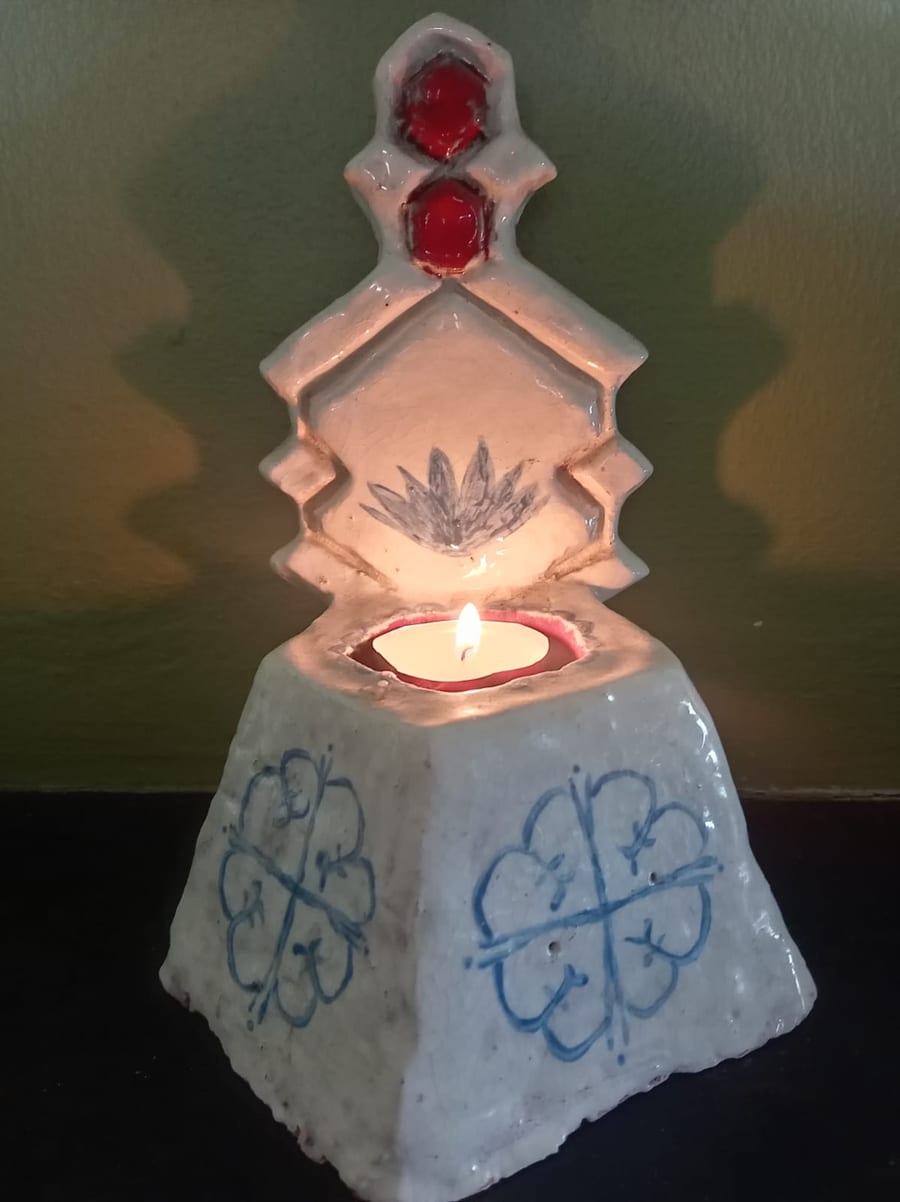
the elegant candle holder that you made for me sits on my mantle place.
I light it often.
I rarely, heaven forbid, buy cheap soap!So much of my life is a hymn to You.
Leigh Meinert is DignitySA’s Operations Manager and a former Advocacy Manager for the Association of Palliative Care Centres.