Dignity Matters
Our bi-monthly newsletter with interviews, expert input, entertainment, local and global news for the DignitySA community.

Guest Editorial
The Liberating Conversation: A Life Well Lived Requires a Death Well Planned
My stepsister Jennie, who suffered from an incurable, degenerative neurological condition, told us all a year before she went to Switzerland that she intended to take up assisted dying. She gave us all many gifts, including that of time, and this made it possible for me to travel with my daughters to the UK to go and say goodbye to her. My young children were amazed by the calm and clarity with which their aunt talked about her impending death, over the dinner table at times, and nervous about what to say in the goodbye cards that we each wrote for her. Together we were able to show them that it is not only ok to talk about and plan for death, but that doing so can be a beautiful way in which we demonstrate our love for each other.
Thankfully, Jennie experienced the peaceful death she hoped for and her memorial service took place recently on the 15th of November. When we visited her in July I gently suggested that she start planning this too and she enjoyed the task. She was open about her choices and so brave in the execution thereof, but our grief and sense of loss is still very real. It is a tender time for our family and many others and so, author Bridget McNulty’s tips on “Grief During the Festive Season” in the Expert Input section of this newsletter, feel especially poignant and helpful.
It is a paradox, is it not? Even if we don’t know, like Jennie did, exactly when we will die, we do know that our lives are finite. Yet we insist on treating the subject of our end as the ultimate taboo, something to be avoided, whispered about, or addressed only when absolutely necessary. DignitySA was founded on the belief that this societal avoidance is a profound disservice to life itself. We believe that death should not be a shadow, but a liberating compass. It is the ever-present awareness of our mortality that grants our actions and choices their ultimate meaning. This is why I love Jeff Foster’s words about “Altars Everywhere” that are shared in this edition’s Poetry Apothecary.
And this is why talking about death is not a morbid exercise, but an act of supreme love, responsibility, and affirmation of self-ownership. In this issue’s exceptional Exit Interview, satirist Ndumiso Ngcobo demonstrates that preparing for our demise can even be humorous at times (if you read nothing else in this newsletter, please do yourself a favour and savour this).
Our premise is simple: A planned death is a death that honours a life lived well. At DignitySA all of our work - from advance directives, to championing for access to palliative care and the recognition of assisted dying for a small, suffering minority - is the practical, constitutional expression of this philosophy. We campaign for the right to choose, not just in life, but at the end of it, and strive to realise the permissions already granted to us here in South Africa through our noble Constitution.
In 2025 thus far we have sought to spur conversations by launching this newsletter, Dignity Matters, as well as a new podcast, A Way To Go. We’ve helped to initiate the Advance Directives Campaign and initiated a seminar series on “Conversations about End-of-Life Care Planning,” as well as a new webinar offering for our members called Dignity Dialogues, which began just last week.
In our first Dialogue, Pi Delport shared movingly how they, like my brother-in-law, accompanied their partner to Switzerland to die and what this taught them. This must be, I imagine, one of the ultimate acts of love, and you can watch the recording of my conversation with Pi at https://www.youtube.com/@DignitySouthAfrica
This year, we’ve broached sensitive topics with palliative care practitioners and religious leaders, and you can engage by visiting our YouTube channel or downloading our templates for advance directives. We encourage you to have “the liberating conversation” with your loved ones and healthcare providers and to follow us on Facebook, Instagram, and WhatsApp to receive our latest news and resources.
We intend to submit our case for assisted dying to the North Gauteng High Court before the end of 2025, and the long road ahead will require courage. Not just from those navigating our legal system, but from every single person who is willing to confront their own mortality and participate in conversations about this, just like my family has. Together we can demonstrate that planning for our death is not a closing chapter, but an enduring testament to our values and how we wish to live, here on Earth and in the hearts of our loved ones.
May we all embrace the certainty of death and loss and talk about this, even with our young ones. And, in doing so, may we feel liberated, may our remaining days be immeasurably enriched, and may we ultimately know peace, as my sister thankfully did.
Leigh Meinert, Operations Manager, DignitySA
The Exit Interview

Dignity Matters poses some questions to:
Ndumiso Ngcobo describes himself as a “former high school teacher turned satirist” and a proud husband, father, son, and brother. He pens a weekly column for the Sunday Times and is the author of three books, “Some of My Best Friends Are White,” “Is It Coz I’m Black?” and “Eat, Drink and Blame the Ancestors.” He is also a broadcaster and currently co-hosts the podcast, “Still Uncaptured,” on Spotify. We are delighted that he is also willing to align himself as one of the newest advocates for DignitySA.
If calories and indigestion were no object, what culinary indulgence would be your last?
It would have to be a Southern India-style mutton briyani cooked by a 78-year-old woman called Mrs. Padayachee or Mrs.Govender from Verulam or Shallcross in Durban who believes that the high cholesterol pandemic engulfing the nation is fake news. It will have to be so drenched in butter ghee that it will be floating on top. She must be running a corner café with questionable hygiene standards on the former Victoria Street in Durban. Served with spicy dhal and sambals, it must be so hot that I’ll need a towel to wipe myself down while I gulp down 2 litres of Sparletta Sparberry.
Ideally, how would you like to go?
The idea of my beloved wife dealing with my death haunts me so much that I would rather bury her than the other way around. After she’s gone, I’d want to perish preferably as an 88-year-old travel writer, in a dinghy cantina in Bogota, Colombia, fighting over the affections of a big-bosomed woman called Consuela who is a dweller in the brothel upstairs, from a single bullet from her jealous common law husband, Alejandro.
In what publication would your obituary appear, and what would its glorious and slightly exaggerated but still truthful headline be?
I am currently in my seventeenth year (uninterrupted) of writing a weekly column for The Sunday Times. I would sincerely hope that my service would make me worthy of at least a 1000-word obituary. The original title of the column when I started, in June 2009, was The Headline Act. I’d hope the headline of the obituary is ‘Curtains down for the headline act’. The cherry on top would be another one in ‘The Paris Review’, titled ‘Demise of a brilliant, deranged mind’.
Imagine your memorial service. What music would be playing? What band or artist would be grateful for the opportunity to perform?
As an agnostic, I don’t believe in the life hereafter or spirits. However, everyone in my life knows I would haunt them if they didn’t play my favourite song of all time, The Temptations’ “Keep My Light In My Window,” an anthem about a life spent in bringing light and lightness to people’s lives. This is why I’m a satirist and humour writer. Parts of the lyrics of the song are:
I wanna ease the pain (that life can bring)
Help them find peace, mmm (their spirit needs)
Have been chosen for (a work to do)
To make this world a much better place
For me and you
Ironically, while I’m an agnostic, I am a cultural Catholic who appreciates the architecture of Roman basilicas and Catholic hymns and liturgy. I would love for a quarter of monks to perform “Kyrie Eleison” at my memorial send-off.
Burial or cremation? If transport, permissions, and expense were no problem, where would you like to be buried, or have your ashes scattered?
I’m a registered organ donor. After they have harvested all the parts that can save a life, help someone get off dialysis, restore their eyesight, etc. I’d ideally wish that my carcass be chopped up into pieces and scattered all over the Hluhluwe Game Reserve to be devoured by wild creatures and join the food chain. I doubt that any of my family members would agree to do this, so I’ll have to settle for cremation. I hope that a bit of my ashes would be kept in a locket to be passed down through the generations in my family. The rest I wish to be scattered over the ancestral origins of my recent forbearers, The Valley of a Thousand Hills, where their own remains are interred.
If you could choose one object to be buried or cremated with, what would it be and why?
It would have to be a copy of my first published work, my collection of satirical essays, “Some of my best friends are white.” That work saved me from pursuing an unfulfilled life of drudgery as a cog in the capitalist conveyer belt and helped me find my purpose in life. I wrote it on company time at a major Anglo-Dutch multinational and it helped me resign and pursue a life in literature and broadcasting. (Mea maxima culpa, Unilever South Africa!)
If you were to haunt someone after your demise, who would it be and why?
As an individual who identifies as a black African, there are things that make me profoundly sad when I behold the lives led by the majority of my people. What a deliberate waste of human potential! Every day I see old, broken women in their sixties, trudging along with swollen ankles towards some menial job cleaning people’s toilets and soiled underwear and wonder what they could have become without the colonial project that sought to deliberately subjugate them. I would reincarnate every delegate of the 1884 Berlin Conference, Cecil John Rhodes, DF Malan and Hendrick Verwoerd and send them into the belly of the Kimberley diamond mines and Transvaal gold mines for a lifetime of harsh, slave existence until their second demise.
Who is in your will? And is there anything that you are leaving that may cause a fight?
My beautiful, incredibly gracious and brilliant wife; the love of my life and my best friend, Tebogo. My four children, Ntobeko, Vumezitha, Samafuze and Sihayo. I have gone to extraordinary lengths to get my children to internalise the fact that everything I own is to be shared equally between them. This includes the land bequeathed to me by my father in The Valley of a Thousand Hills. They are all avid readers and will have to find a way to share my library.
What do you still need to do before you kick the bucket?
I have another 30 to 50 books in me that I know I will write before I’m 80, health and lifespan allowing. I have even quit alcohol and cannabis and changed my lifestyle completely to ensure that I retard the acceleration towards my demise. With my partner-in-crime in broadcasting, Kgomotso Matsunyane I have started a podcast called “Still Uncaptured” that we are developing to become a lifelong talk show. With my Catholic priest brother, Fr. Mxolisi Ngcobo, we are working hard to convert the ancestral land our father left us into a centre of intellectual engagement and healing retreat.
Finally, is there anything you’ve secretly wondered about death, but been too polite to ask?
No. I don’t believe in a life hereafter. I think when we die, it signals the end of this wonderful journey. I’m only curious to find out what my last thought will be before I’m extinguished. I hope it’s, ‘What a life! What a journey! Like Ole Blue Eyes, I did it my way and took more out of life than it took out of me.’
Expert Input

Grief during the Festive Season
Bridget McNulty, author of The Grief Handbook: A guide through the worst days of your life
It’s the most wonderful time of the year… except when it isn’t. Grieving during the festive season can feel like a double blow: not only are you suffering the loss of your loved one, but you’re also at odds with the rest of the country as they celebrate the carefree days of summer.
Grief has no season
The reality, of course, is that grief has no season. We are often struck down by it when someone we love dies, but grief is notoriously cyclical: it returns, again and again, until eventually we have incorporated our loss into our daily lives, and learn to live without the person we love.
If you’re grieving this festive season: I see you. I’ve been there. It sucks.
Somehow, although grief is not confined to one season, it fits the melancholy of winter better. Short days, dark nights, cosy indoor activities – these are all much easier to lean into when you’re exhausted and listless and not sure which way is up. But long summer days, braais, drinks around the pool… These can be harder to deal with when everything feels dark.
My advice, simply, is: you do you. If an invitation is extended and you feel up to it, join for a bit, with the caveat that you’ll slip out when you’ve had enough. If all you want to do is curl up on the couch and be alone, that’s fine too. Sometimes distraction helps to lift the fog of grief for a short while; sometimes it feels like an enormous effort. Only you know how you are grieving, and there is no right or wrong way.
Tips for friends of those who are grieving during the festive season
It is helpful, though, for your friends (and family) to have some understanding of what you’re going through. While everyone grieves differently, there are a few tips that can ease the journey - particularly in what is usually a very festive, social, busy time.
Don’t be afraid to talk about the person who has died.
It can seem as if festive celebrations and death are so at odds that talking about the person who has died is anathema, but it can be so helpful to gently ease them into the conversation - perhaps with a memory of previous years, or a story they loved telling.Set up a simple shrine.
Similarly, it’s helpful to have a quiet space that those who are grieving can retreat to - even if it’s just a photograph and a bunch of flowers, with a candle burning. A physical space so that the person who has gone can still be incorporated into the day’s events.Be gentle with scheduling.
Although traditions are often set in stone, this isn’t the year to insist the person who is grieving does what they always do. Perhaps they don’t have the energy, or the will. Perhaps they can only pop in, or need to cancel at the last minute. Be as gentle as you can with them as they navigate this new normal.Ask, “How are you today?”
“How are you?” is often too overwhelming a question to answer, but “how are you today?” opens the door to feeling fine, actually, even though yesterday was awful. Or feeling pretty terrible, but maybe tomorrow will be better.
Grief has no season, and no deadline, and is different for everyone. But we all have the capacity to hold space for those who are grieving, particularly in a time when it might feel as if the rest of the world has merrily moved on. Here’s to a loving festive season for us all.
DignitySA will be hosting a free webinar with Bridget McNulty and Vuya Kabanyane Ilengou for our members on the topic of “Grief During the Festive Season.” Sign up to join us on the evening of Thursday, 4 December by clicking here.
On the Lighter Side
Popcorn Time
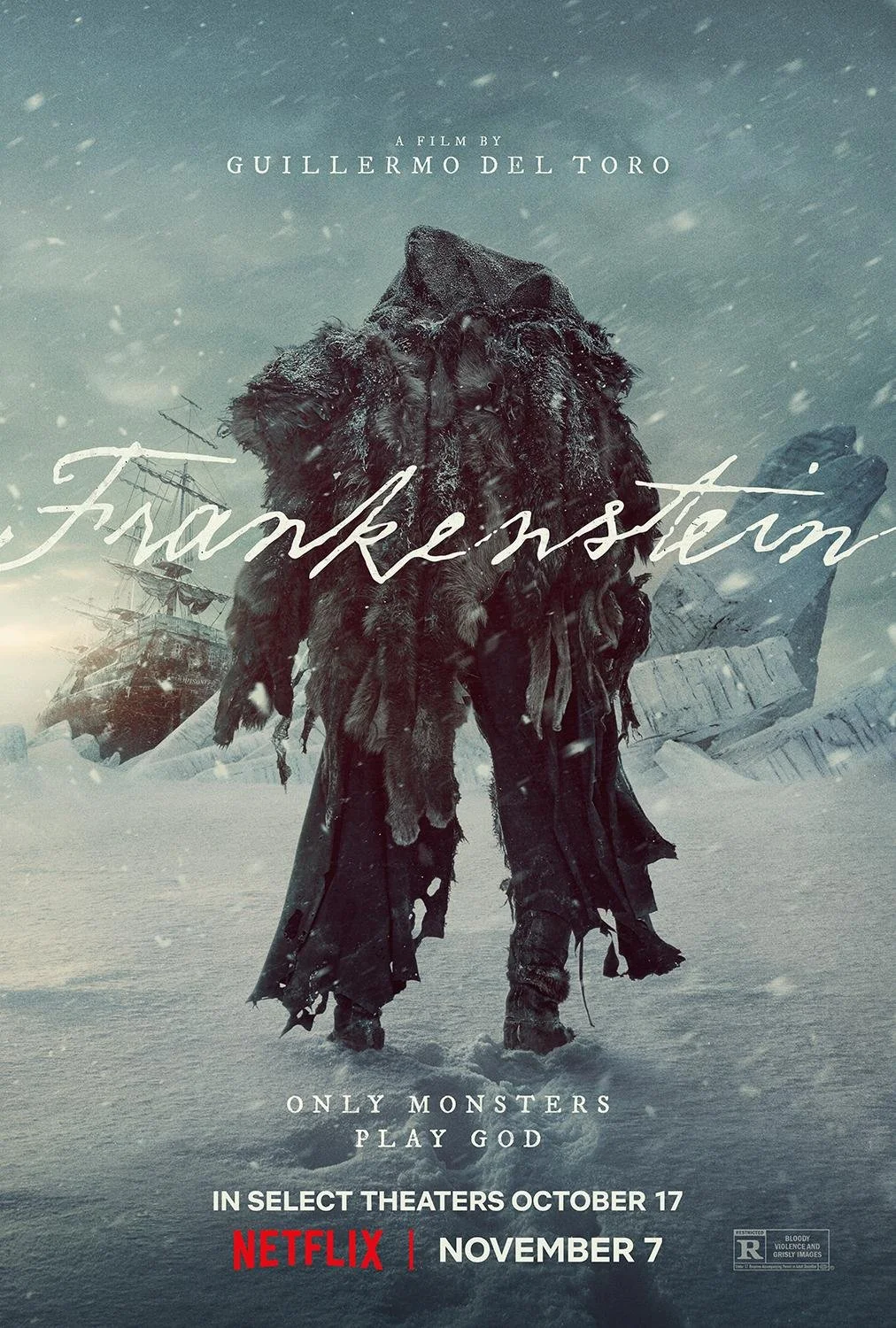
REVIEW: Frankenstein
Reviewed by: Dawid van der Merwe
Rating: ★★★★★
Film Review: Guillermo del Toro’s Frankenstein (2025) “The Grace of the Unmade”
Guillermo del Toro’s Frankenstein is not a horror film. It is an elegy, a requiem for every misunderstood creation, and for every god who regrets giving his creation breath. Where Mary Shelley’s original novel asked what it means to play God, del Toro’s film dares to ask the harder question: what if God Himself does not fully understand His creation?
From its first scene, the creature awakening beneath a flickering skylight as rainwater runs down its face like tears, del Toro sets a tone that is both mythic and intimate. This is not the green-skinned brute of popular lore. This is a being born of grief and yearning, a patchwork of devotion and mistake. And like his maker, he wants to be seen, not as an experiment, but as a soul.
The Main Theme: Creation and the Hunger to Be Known
At its core, Frankenstein (2025) is about the loneliness of making something that cannot love you back the way you imagined. Victor (played with tragic restraint by Oscar Isaac) does not seek power, but understanding. “To know how God thinks,” he says early on, “is to share His sorrow.” That line becomes the film’s thesis: that creation is a kind of heartbreak.
The creature (Andrew Garfield, nearly unrecognizable beneath subtle prosthetics and mournful eyes, but a beautiful “monster” – Rocky comes to mind) mirrors Victor in every way: both are curious, both long for connection, and both are punished by the limits of what they can comprehend. The film weaves their relationship through alternating soliloquies, one in the sterile light of the laboratory, the other in the cold expanse of the world that rejects him.
Subplots: The Soul, the Body, and the Mirror of Pain
Running beneath the central narrative are several interlocking subplots that explore facets of the same wound. Elizabeth (Mia Goth), Victor’s brother’s fiancée, becomes the conscience of the film, not merely a quadrangular love interest, but a philosopher in her own right. Her “butterfly monologue,” now destined to be iconic, encapsulates the entire moral structure of del Toro’s vision:
“Beautiful creature, is she not? Remote, entirely bewitching, but so odd.
Three hearts, a thousand eyes, white blood... and a fascinating lack of choice.
Choice is the seat of the soul, the one grace God granted us. I have chosen.”
Here, del Toro reframes the story’s theology. The soul, he suggests, is not an object placed inside us by divine fiat; it is the capacity to choose, to seek the light despite our wiring. The monster’s tragedy, then, is not that he lacks a soul, but that he was denied the freedom to discover and train one. (Like a modern-day LLM)
Creator and Creature: The Divine Paradox
The relationship between Victor and his creation echoes the uneasy intimacy between God and humankind. Both reach for one another across the abyss, the creator longing to be understood, the creature aching to be acknowledged. But del Toro’s genius lies in refusing to make either side purely right or wrong.
Victor is not a villain, merely a god without foresight. The creature is not evil, merely a child without guidance. Each sees the other’s flaws as proof of betrayal, when in truth, they are mirror images, two reflections of the same flawed longing.
The film’s middle act turns this theological mirror into tragedy: the creature, desperate for recognition, commits violence as a way of forcing Victor to feel. The creator, terrified of what he’s made, condemns him as a mistake. It’s a divine argument, the same that echoes in the silence between man and heaven.
Redemption: Two Graces
The final act is del Toro at his most operatic, snow falling through broken cathedral glass, the monster cradling his dying maker as if in a reverse Pietà. In that moment, both creator and creation find their redemption not through forgiveness, but through understanding.
Victor, with his final breath, admits: “I thought I made you from death, but I see now, I made you from my pain.” And the creature replies: “Then I am your soul, and I am free.”
It’s an ending that feels both tragic and transcendent. Death becomes grace; creation becomes communion. The monster, once cast out, walks into the dawn, carrying the flicker of his maker’s humanity with him.
Pain, Choice, and the Soul
Pain in Frankenstein is not punishment; it is the evidence of being alive. Every major character wrestles with the boundaries of pain: Victor in his guilt, Elizabeth in her compassion, and the creature in his isolation. Through them, del Toro reframes Shelley’s Gothic horror into a meditation on the human condition: We are all stitched together by suffering, all searching for the light that gives our choices meaning.
The Cinematic Language: Gothic Intimacy
Visually, del Toro creates a world of decaying beauty, laboratories lit like cathedrals, rain washing over skin like baptism, shadows breathing like living things. The production design references The Shape of Water and Crimson Peak, but feels grander, sadder, like the final verse of a prayer that began centuries ago.
Composer Alexandre Desplat’s score hums with heartbeats and sighs, music that feels less written than remembered.
Conclusion: A Story About Us
In the end, del Toro’s Frankenstein isn’t really about Victor or his creation. It’s about us, every human who has ever felt unseen by their god, every parent who built something they could not control, every soul that loved too fiercely and was misunderstood.
It reminds us that creation is never complete until both creator and creature learn to let each other go. And that, perhaps, is what del Toro wants us to take home: The soul is not given. It is chosen, again and again, in the face of pain, loss, and love.
I predict that Guillermo del Toro’s Frankenstein will clean up at the Oscars. Go see it on the big screen. It’s a film that will move you in profound ways…
Good Reads
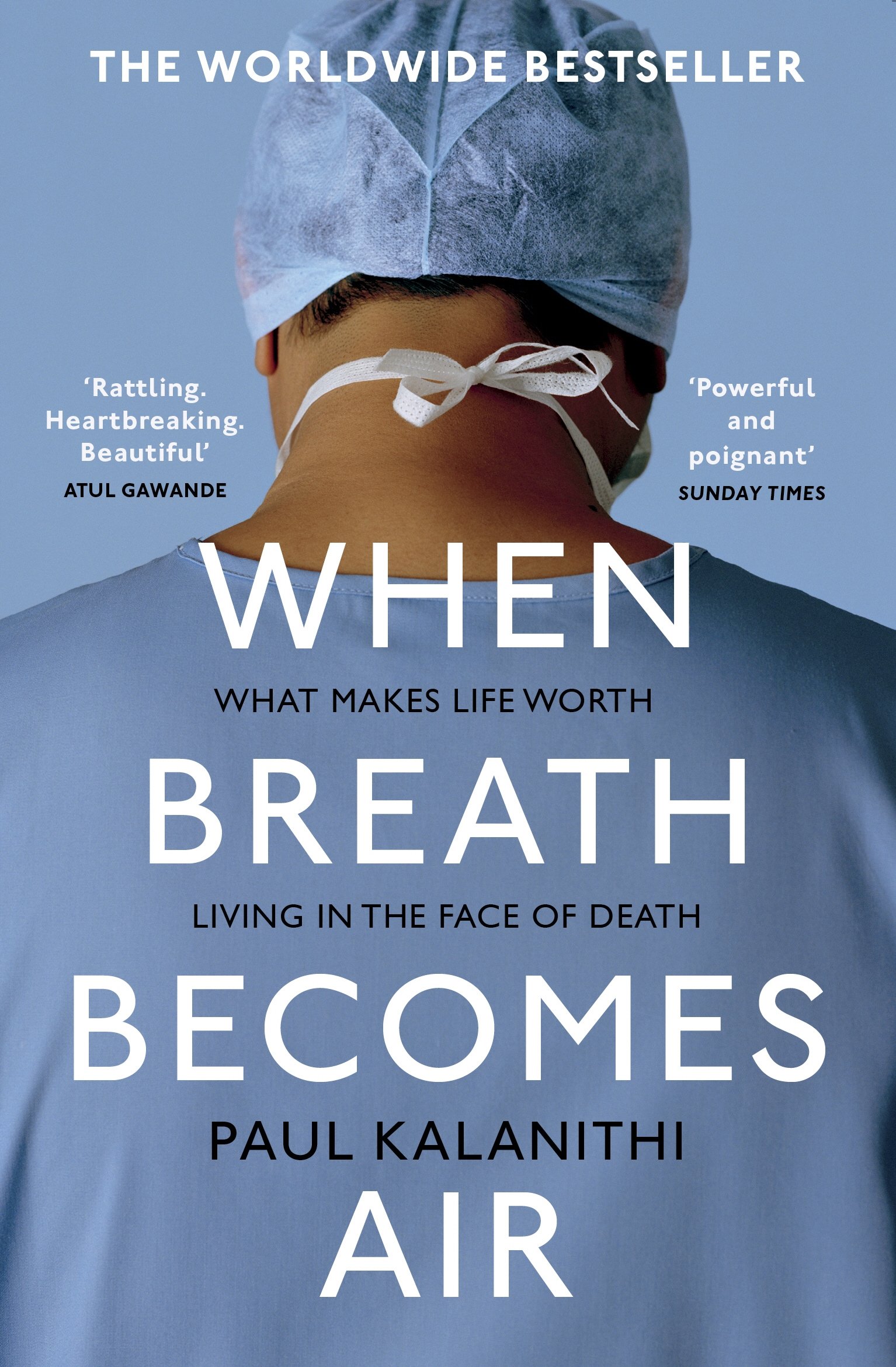
REVIEW: “When Breath
Becomes Air”
by Dr. Paul Kalanithi
Reviewed by: Dawid van der Merwe
Rating: ★★★★½
When Breath Becomes Air by Dr. Paul Kalanithi
Few books confront mortality with such grace, precision and courage as When Breath Becomes Air. Written by Dr. Paul Kalanithi, a brilliant neurosurgeon diagnosed with stage IV lung cancer at only 36, the book is both a memoir and a meditation. It is a search for meaning in the face of death by someone who spent his life studying the brain, the very seat of consciousness and identity.
Kalanithi’s prose is luminous, both clinical and poetic, as he charts his journey from doctor to patient, from the one who saves lives to the one who must let go of his own. What gives the book its extraordinary power is not only his intellectual clarity but his unflinching honesty. He does not offer easy answers or sentimental consolations. Instead, he invites us to witness the transformation that occurs when one lives with full awareness of mortality.
In his final months, as his body fails and his time narrows, Kalanithi continues to ask, What makes life meaningful in the face of death? His reflections lead to an understanding that life’s value is not measured by its length, but by the depth of our presence, our love and our connection to others. His decision to have a child with his wife, Lucy, despite knowing he will not live to see her grow up, becomes an act of profound hope and defiance. It is a testament to the continuity of love beyond death.
When Breath Becomes Air is not only a memoir of dying, but a guide for living. It reminds us that dignity is not found in avoiding pain or prolonging life at all costs, but in embracing the truth of our humanity with courage and grace.
For those who support or are part of the DignitySA community, this book resonates deeply. It echoes our shared belief that confronting death honestly, and choosing how we live and die, is an act of both integrity and compassion.
Why read this
A profoundly human reflection on purpose, love, and mortality. When Breath Becomes Air offers a rare window into the transition from healer to patient and invites readers to live and die with clarity and dignity.
“I can’t go on. I’ll go on.”
- Samuel Beckett, quoted by Dr. Paul Kalanithi
South African Update
In the last two months, we have been encouraging people to talk about death and dying:
Journalist Ndumiso Ngcobo and activist Dieter Harck joined Leigh Meinert, DignitySA’s Operations Manager, for a fascinating interview with Faith Mangope on PowerFM in September. Is there precedent for assisted dying in African culture? Apparently so, you can take a listen at https://www.dignitysouthafrica.org/blog/metrofm
In October, John Maytham interviewed Leigh Meinert about advance directives and the process to appoint a proxy to speak for you when you cannot. To learn more, click here.
Chair Prof Willem Landman wrote a lyrical editorial on The Last Right: Why South Africa Must Legalise Assisted Dying that was published in The Independent Online in October
Our erudite and prolific Digital Content Manager, Dawid der Merwe, published several poignant blogs, including Boo or Taboo?, The Fear of Becoming Irrelevant and The Polite Tyranny of Living.
We helped the Advance Directives Campaign host their first webinar on Conversations About End of Life Planning, which you can watch here.
We released our second podcast episode, called Love’s Journey, and followed up with Pi Delport, who is the subject of this beautiful story in our first Dignity Dialogue, which you can watch on our DignitySA YouTube channel.
Currently, we are finalising our court case and preparing for much more public engagement going forward. If you would like to stay in touch with your breaking news and know when we submit our case and what is being said about this, please join our WhatsApp community, called Friends of DignitySA.
Global News Round-Up
On the 2nd of November, countries around the world marked World Right To Die Day. Founded in France in 2008, this annual global day aims to raise awareness about how societies can approach end-of-life care and death with more compassion. This year, Australia took the lead by launching its Young Ambassadors Project and introducing new voices to the global campaign for the right to die with dignity.
In the United Kingdom, the Terminally Ill Adults (End of Life) Bill continues to be thoroughly scrutinised. The House of Lords Select Committee on the Bill held its final oral evidence session in early November 2025, hearing from pharmaceutical and legal experts about issues like the complexity of the Bill, the role of drugs, and potential human rights challenges. Organisations like Dignity in Dying and Humanists UK have been actively involved in providing evidence and campaigning, emphasizing the Bill's safeguards and public support.
In the United States, the Illinois Senate passed the End-of-Life Options for Terminally Ill Patients Act in late October 2025, marking a key legislative victory for Death with Dignity campaigns in that state. And in Canada, the ongoing debate and legislative work regarding Medical Assistance in Dying (MAID) for people whose sole underlying condition is a mental illness continues to be a major topic. Earlier last year (February 2024), the temporary exclusion of eligibility for MAID in these circumstances was extended until March 17, 2027. Also, the first time, recent data published in October shows that the rate of growth in the demand for and take-up of assisted dying in Canada may be slowing and the MAiD programme approaches long-term stability: https://wfrtds.org/after-years-of-growth-maid-deaths-begins-leveling-off/
More Articles From Our Website


Join Us
Become A Member of our non-profit voluntary association by clicking the “Become A Member” button on this page: DignitySouthAfrica.org/support
Members will be invited to attend our online Annual General Meeting and will receive our unique newsletter ongoingly. For more information and any queries, please contact [email protected]
Poetry Apothecary
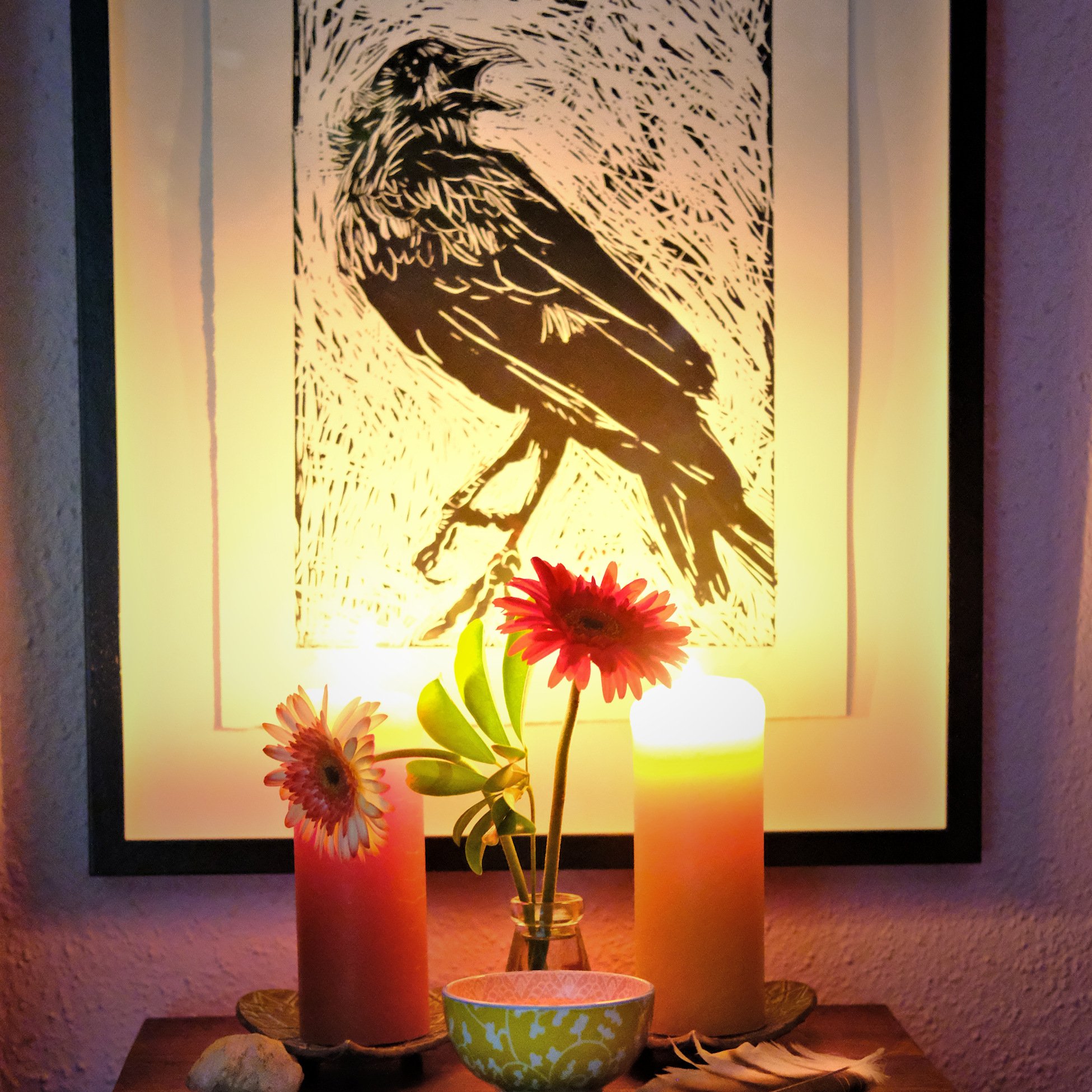
Words can be a powerful balm for body and soul. This month, we share Altars Everywhere by Jeff Foster.
Altars Everywhere
by Jeff Foster
“You will lose everything. Your money, your power, your fame, your success, perhaps even your memories. Your looks will go. Loved ones will die. Your body will fall apart.
But right now, we stand on sacred and holy ground for that which will be lost has not yet been lost, and realising this is the key to unspeakable joy.
Whomever or whatever is in your life now has not been taken away from you. This may sound trivial, obvious, like nothing, but really it is the key to everything. The why and how and wherefore of existence.
Impermanence has already rendered everything and everyone around you so deeply holy and significant and worthy of your heartbreaking gratitude.
Loss has already transfigured your life into an altar.”
