

Featured in this issue:
From the Chairperson’s Desk: Willem Landman
The Exit Interview: Mike van Graan
Expert Input: The State of The Nation - and Ourselves by Mapi Mhlangu
Good Reads: The Emperor of Gladness by Ocean Vuong
Poetry Apothecary: Sabbath - 1993, I by Wendell Berry
From the Chairperson’s Desk

A Movement of Many Voices: How Our Journey to Dignity Is Gaining Ground
As we prepare for our Annual General Meeting (AGM) on Friday, 27 March, I find myself reflecting on the incredible momentum we have built together. While our advocacy for medical assistance in dying (MAiD) is increasingly making headlines, the heart of DignitySA lies in the broad spectrum of work we do behind the scenes—work we are eager to share with you in detail during our AGM>
For those looking for a high-level summary of our progress, I encourage you to view our latest Annual Report here.
A Strategic Breakthrough: The Advance Directives Campaign
One of our primary goals this past year was to table a new Advance Directives Bill in Parliament. To drive this forward, we spearheaded a coalition called the Advance Directives Campaign (ADC) and coordinated a Working Group that has been meeting frequently and earnestly for the past six months now.
Encouragingly, we have determined that our existing law provides a sufficiently robust legal foundation that ensures that your end-of-life wishes will be respected when you can no longer speak for yourself. Together with legal experts, the Working Group has confirmed that there is a powerful, but often overlooked mechanism, in Section 7 of the National Health Act (NHA) of 2003. Incredibly though almost no one - doctors, lawyers and the general public - knows about a section 7 mandate.
To help you navigate this "invisible" right, we invite you to join our next Dignity Dialogue on The Power of Your Section 7 Mandate. In this webinar we will explore why having a section 7 mandate is even more important than drawing up a living will, and what can do to ensure that your end-of-life wishes are respected when you cannot speak for yourself. To register to attend this webinar, please click here.
(Insert Dignity Dialogues flyer)
Shining a Light on Hospice Heroes
Advocating for high- quality palliative care remains a key focus area for DignitySA and last month, we hosted a Palliative Care Information Morning at the Desmond & Leah Tutu Foundation. In this video of her talk, Cecily van Heerden of the Association of Palliative Care Centres (APCC) shines a light on the persistent misconceptions about hospice care and the vital services that the APCC’s members avail to patients and families across the Western Cape.
Another Rich Edition of Dignity Matters
This 6th edition of our newsletter is particularly vibrant. We are honored to feature the playwright Mike van Graan as our witty and gracious subject for our Exit Interview. Likewise we are grateful to Mapi Mahlangu of Love Legacy Dignity for contributing her thought-provoking column on The State of Our Nation—And Ourselves for our Expert Input segment. We hope this edition of Dignity Matters gives you pause for thought, a reason to smile, and, above all, a sense of hope.
For an additional dose of inspiration and camaraderie, please join us at our online Friday 27 March from 3 - 5 pm. Your voice and your stories are the lifeblood of this movement. Click here to register for the AGM
With gratitude,
Prof Willem Landman, Chairperson, DignitySA
(Insert AGM flyer)
The Exit Interview
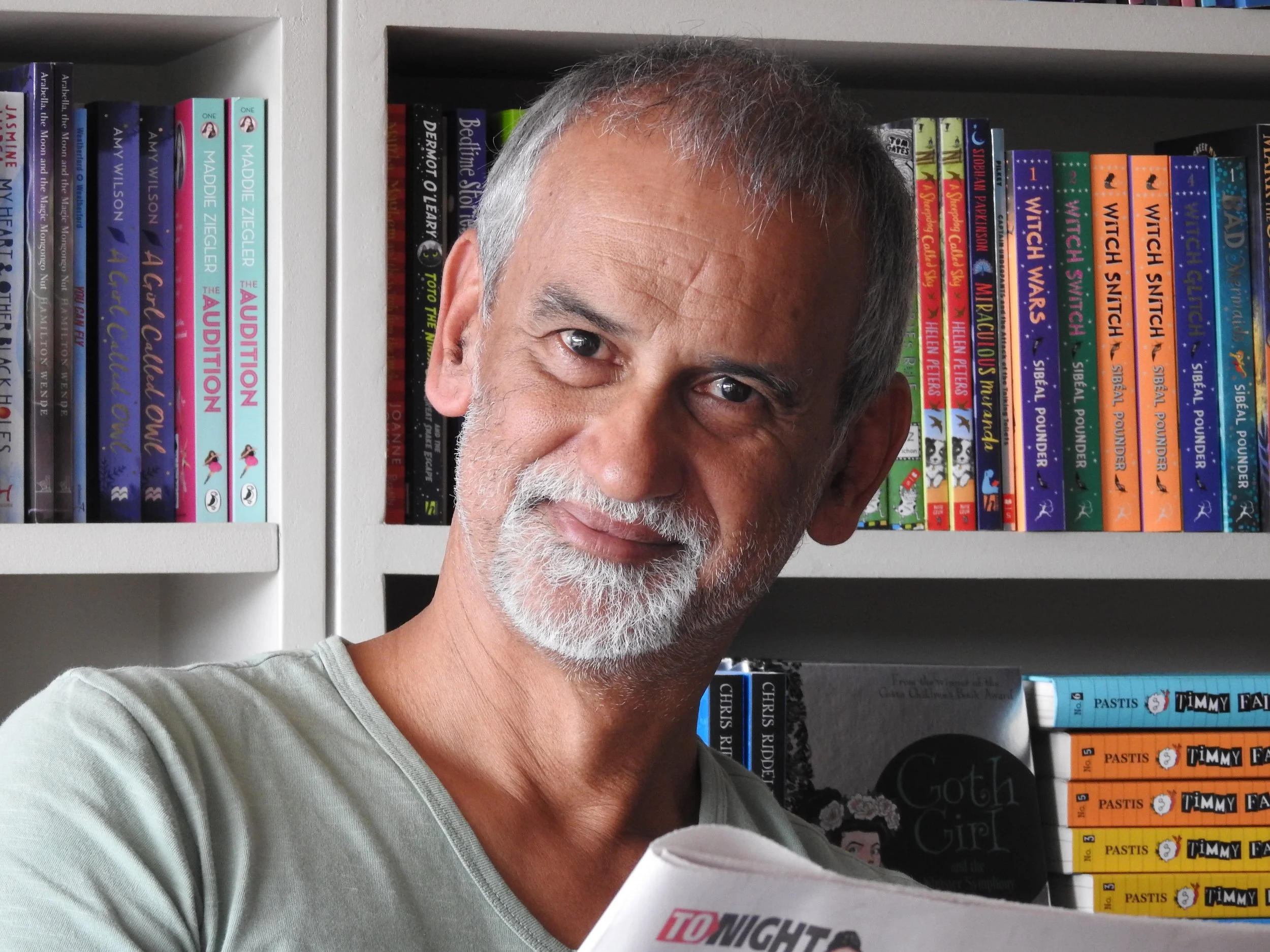
Dignity Matters poses some questions to:
Mike van Graan, is a playwright and producer whose work engages that personal and political. With 41 plays under his belt - including To Life, With Love featuring John Maytham - Mike is regarded as one of South Africa’s foremost contemporary playwrights and has garnered numerous awards and nominations.
If calories and indigestion were no object, what culinary indulgence would be your last?
Mr Delivery would be available and that I won’t be using John Steenhuisen’s credit card, it would have to be the chicken In my sleep, somewhere between 85 and 90 with a fully functional body and mind, having just eaten this meal and after making passionate love – without the help of Viagra - to my current partner (who will hopefully still be my partner then). If I am not in a healthy state – as soon as I have lost my full mental and/or physical capacity to look after myself - I would like to be euthanized. and the smoke-fried potatoes from Vixi Social House in Cape Town! As a starter – since this is the last supper, I may as well go big – it would be a Lebanese meze (if there is a heaven, I’m sure it will be catered by Lebanese chefs!). And to round it off, the cheesecake from New York Bagel.
Ideally, how would you like to go?
In my sleep, somewhere between 85 and 90 with a fully functional body and mind, having just eaten this meal and after making passionate love – without the help of Viagra - to my current partner (who will hopefully still be my partner then). If I am not in a healthy state – as soon as I have lost my full mental and/or physical capacity to look after myself - I would like to be euthanized.
In what publication would your obituary appear, and what would its glorious and slightly exaggerated but still truthful headline be?
Probably in a publication called Scene Today, Gone Tomorrow: “He was one of our top playwrights, if not in quality, then at least in quantity”. The most common adjective to describe my theatre work is ‘prolific’ which means very little other than ‘he writes a lot!’
Imagine your memorial service. What music would be playing? What band or artist would be grateful for the opportunity to perform?
I’m not sure I would have a memorial service. Like the character in my play - To Life, With Love – I would probably like to have a celebration of my life while I’m alive. Maybe at the age of 70 or 75. A weeklong celebration with my extended family, grandchildren if I have any, and friends with multiple events. Meals with loved ones, readings from excerpts of my work, testimonies from people who have worked with me, and a good oI have a living will which stipulates that useable organs may be harvested, and the rest should be cremated. The scattering of ashes is more sentimental than of any real value to anyone – least of all, me. I think of myself as being relatively together, so I’m happy not to be scattered anywhere. But if my sons or partner wish to do something with my ashes, that would be up to them.ld dance party with DJs playing a combination of 80s pop music and some of the best African dance music!
Burial or cremation? If transport, permissions and expense were no problem - where would you like to be buried, or have your ashes scattered?
I have a living will which stipulates that useable organs may be harvested, and the rest should be cremated. The scattering of ashes is more sentimental than of any real value to anyone – least of all, me. I think of myself as being relatively together, so I’m happy not to be scattered anywhere. But if my sons or partner wish to do something with my ashes, that would be up to them.
If you could choose one object to be buried or cremated with, what would it be and why?
My phone. Just in case I’d like to whatsapp someone….But seriously, it has so much information on it, for reputational and POPI Act purposes, it may be better to have it buried with me.
If you were to haunt someone after your demise, where would it be and why?
I think I would like to haunt SARS. And banks. These are the institutions that most haunt creatives while we’re alive. So I’d like to haunt them back.
Who is in your will? And is there anything that you are leaving that may cause a fight?
My two sons are my primary beneficiaries. I’m a theatre-maker, so I won’t have too much to leave behind or to cause fights about. My plays will be part of some kind of Trust and will be available for production, with my sons being the ongoing beneficiaries from any royalties.
What do you still need to do before you kick the bucket?
I’ve been very fortunate to have had jobs that have had me travel around the world, mostly at someone else’s expense. I don’t really have the desire for long haul flights any longer. I wouldn’t mind doing more theatre and having more a profile as a playwright across the African continent and in Global South places like Latin America (I did have one play translated into Spanish in Argentina), Asia and the Arab world. Oh, and I’d like to write a novel. Or two. And perhaps a six-part television series based on one of my novels, which may be an adaptation of one my plays…
Finally, is there anything you've secretly wondered about death, but been too polite to ask?
No
Expert Input

The State of Our Nation - And Ourselves
Mapi Mhlangu is a founding Director of Love Legacy Dignity (LLD). Much like this stirring reflective piece, Love Legacy Dignity’s Live By Design - Finish Strong programme supports individuals to reflect on their life choices, strengthen relationships and live with greater intention. Please see the flyer below for more about the free introductory talk that Love Legacy Dignity are offering on Wednesday evening, 8 April.
Every year, presidents stand before their nations to declare the state of things. They speak of progress and promise, of plans and priorities. They frame the narrative of where a country has been — and where it is going.
This past month, the world listened.
In the United States, Donald Trump delivered the State of the Union Address — a speech shaped by assertion, projection, and political positioning. In South Africa, Cyril Ramaphosa delivered the State of the Nation Address — a moment of reflection, accountability, and renewed promise in a country still shaping its democratic identity.
Two leaders. Two nations. Two stages.
Yet beyond the podiums and applause lines lies a deeper question that concerns all of us: What is the state of our own union — within ourselves, within our families, within our communities?
Because long before presidents address nations, individuals must first address themselves.
The Ritual of Reflection
State addresses are meant to be civic rituals of accountability. They force leaders to pause and measure their promises against performance, their vision against reality. They catalogue progress. They acknowledge shortcomings — sometimes. They attempt to set the tone for the road ahead.
But reflection without honesty is theatre.
And theatre without accountability quickly becomes manipulation.
This truth applies not only to governments, but to us.
In our own lives, we deliver similar “state addresses” — at the beginning of a year, the start of a new job, after heartbreak, after failure, or even after success.
We promise ourselves:
• This year I will prioritise my health.
• This time, I will love differently.
• I will show up more fully for my children.
• I will build that business.
• I will forgive.
• I will heal.
Yet by March, some of those commitments lie quietly abandoned.
Why?
Overpromising, Underdelivering
There is something profoundly human about overpromising. It grows from hope, ambition, and the desire to become more than we currently are.
But when overpromising becomes a pattern — whether in leadership or in life — trust begins to erode.
When governments promise jobs and unemployment rises, citizens lose faith.
When we promise presence but remain distracted, our loved ones lose trust in us.
When we promise integrity but quietly compromise, we lose respect for ourselves.
And that is where dignity begins to fracture.
Dignity is not built through grand declarations.
It is built through kept promises — through the quiet discipline of doing what you said you would do, even when no one is applauding.
The Danger of Dishonest Reflection
What happens when reflection becomes selective memory
When leaders highlight victories but bury failures?
When do we rewrite our own stories to avoid discomfort?
Dishonest reflection is seductive. It protects the ego and shields us from shame. It allows us to believe the gap between who we say we are and who we actually are is smaller than it truly is
But growth lives in that gap.
If we do not interrogate why we failed, we will repeat the failure.
If we do not ask why we overcommitted, we will overcommit again.
If we do not examine why we procrastinate, avoid, or withdraw, we will continue to do so.
Honesty is uncomfortable. But it is also the birthplace of transformation.
Love Requires Accountability
Love — whether romantic, familial, or civic — cannot survive on speeches alone.
A nation cannot be loved into prosperity without execution.
A partner cannot be loved into security without consistency.
A child cannot be loved into confidence without presence.
Love without follow-through becomes sentiment.
Love with discipline becomes a legacy.
And legacy is not what we declare. It is what remains when the speeches are forgotten.
Planning Ahead with Integrity
Planning matters. Vision matters. Strategy matters.
But planning must be grounded in reality:
Realistic assessment
Capacity evaluation
Emotional honesty
Structural support
Measurable milestones
Nations fail when they promise beyond their institutional capacity.
We fail when we promise beyond our emotional or practical capacity.
The real question is not simply: Did I fail?
The deeper question is: Did I understand my capacity before I committed?
Perhaps the invitation this month is not to make louder promises.
Perhaps it is simply to make fewer — and keep them.
The State of Your Inner Nation
If you were asked to deliver a State of the Nation Address about your own life today, what would it sound like?
Would you highlight growth?
Would you admit avoidance?
Would you acknowledge relationships that need repair?
Would you name habits that need dismantling?
Would you celebrate resilience?
Or would you deliver a polished speech designed to protect your image?
Reflection without dignity is performance.
Reflection with dignity is courage.
And courage is contagious.
A Different Kind of Address
What if this month, instead of asking:
What do I want to achieve?
You asked:
What have I been avoiding?
Instead of asking:
What will I build?
You asked:
What must I repair?
Instead of asking:
What will I promise?
You asked:
What can I sustain?
This is where love deepens.
This is where legacy becomes intentional.
This is where dignity becomes non-negotiable.
Presidents will continue to stand behind podiums.
Nations will continue to measure progress.
Politics will continue to polarise.But the most important union you will ever govern is the one within yourself.
So as the speeches fade and the analysis quiets, may you deliver your own address — not to impress, but to transform.
Make your promises measured.
Your reflection honest.
Your love disciplined.
Your legacy earned.
Your dignity intact.
Because the true state of a nation always begins with the state of the heart.
With love, legacy and dignity — always.
(Insert flyer)

Good Reads
REVIEW:
“The Emperor of Gladness”
by Ocean Vuong
Reviewed by: David Coetzee
Rating: ★★★★½
The Emperor of Gladness is a powerful novel about how people search for meaning, care, and connection while living with pain, difficult memories, and uncertainty.
Though the novel weaves together multiple themes, it is the relationship formed through caring for an older person with dementia that anchors the story.
It combines fiction with non-fiction covering a number of aspects of Ocean’s own life; being poor immigrants who fled Vietnam to the US, having inter-generational family tensions living with his single-parent mother and grandmother who suffers from schizophrenia, and working as a farm labourer, in a fast food diner and as a carer.
Grazina, 82 years old, was born in Lithuania, fled from Stalin to the US as a teenager, and lives in East Gladness, a small town in Connecticut. She has a large dispensary of pills, always eats prepacked food for dinner and she has had a number of carers. Destabilising hallucinations and insomniac attacks caused by her pre-frontal lobe dementia are frequent, and worsening.
Hai is 19 years old, a substance abuser returning from rehab and supposedly in remission. He is on his way to jump from a bridge, close to where Grazina lives, but instead crosses it, as he is called out and “adopted” by Grazina. Despite their differences, they form a strong bond. Both are isolated and living on the margins of society. He becomes her carer and they support each other in order to survive the loneliness in a harsh and unfriendly world.
When Hai realises that Grazina’s mental state is worsening, they invent role-plays to bring her down from her hallucinations. The games include experiences from Lithuania, the war and her youth. When Grazina sleeps, a vulnerable Hai takes liberties and uses her prescription medicines. This reflects the fragility of his own journey of recovery. As he says “Two Dilaudids, crushed and snorted, are a story about time out”. This becomes a chaotic but deeply human relationship with “found family”, as they navigate their uncertain future.
And things do become wobbly at times. An example is when Hai has to deal with Grazina’s harsh son and family as they fail to understand the connection between them and they move her to an institution.
Although this is a novel with different themes, it directs our attention primarily to living and finding gladness on the fringes of society. There are interludes, dealing with family tensions, and work and social experiences, but all centred around how gladness is found over life’s hopeless situations. We also see how the weight of past memories are not left behind and how they often shape how Hai and Grazina live with tenderness in the present.
As one reviewer stated on the cover: “Hai and Grazina are taken from the margins of American life by Ocean Vuong and, by dint of great sympathy and imaginative genius, placed at the very center of our world”.
His writing is poetic, funny, touching and full of drama that is at times almost surreal.
This young author is an astonishing observer of the world.
South African Update
The recent death of entertainer Ian von Memerty sparked extensive debate in South Africa. DignitySA issued the statement below and our Chair wrote this article in the Afrikaans publications Die Rapport. The following articles also helped to clarify how our campaign for medical assistance in dying (MAiD) is different from suicide and ‘self-deliverance’.
End of Life Care vs Suicide: Von Memerty’s Death Muddies Attempts at Legislative Change for Terminally Ill - Marianne Thamm in the Daily Maverick - 6 March
Von Memerty’s ‘Self Deliverance’ and the Ethical, Legal Controversies of Assisted Dying - Prof Chris Jones, 7 March
Ian von Memerty se Dood en die Etiek van ‘Sefverlossing’- Willemien Brummer, 12 March
Statement Published by DignitySA on 2 March
DignitySA has learned with sadness that Ian von Memerty died last week. We send our condolences to his family and friends.
It is important to make a very clear and factual distinction between the decision that Ian (and others, like the author Karel Schoeman) took, and the campaign in which we are involved. At stake is the difference between lawful medically assisted dying and suicide.
Our organisation is in the final stage of our preparations to approach the High Court in April, seeking a review of our common law that regards medical assistance with dying as a criminal offence. We ask the court to decriminalise medical assistance in dying (MAiD) and to direct Parliament to legalise it by passing a law appropriate for South Africa.
Our court application is about medical assistance in dying by a healthcare professional, following an informed request by a competent person suffering from a terminal or irremediable condition that is causing the person intractable and unbearable suffering that cannot be satisfactorily alleviated by any of the currently available treatment options.
DignitySA is a non-profit organisation dedicated, among others, to the recognition of medical assistance in dying as a lawful end-of-life option in South Africa, an option founded on the principles of equality, human dignity, freedom of choice, and bodily and psychological integrity. Our argument is based on rights in the Constitution’s Bill of Rights, scientific research, legal precedent, responsible administrative requirements, and effective safeguards.
Global News Round-Up
The global movement for assisted dying has experienced a bittersweet couple of months. While there have been landmark victories in New York, France and Jersey, the movement recently suffered a significant setback in Scotland.
United States: New York State became the 14th jurisdiction to authorise MAiD when Governor Kathy Hochul officially signed the Medical Aid in Dying Act into law on February 6, 2026. The law is set to go into effect in August, allowing time for the Department of Health to establish reporting regulations and for healthcare facilities to train staff.
France: On the 25th of February the French National Assembly took a decisive step towards legislation with the approval of the Assistance in Dying bill in its second reading (299 votes to 226). The bill is now moving to the Senate, with debates scheduled for early April 2026.
Jersey: On the 26th of February, the States Assembly gave final approval to the Assisted Dying Law with a decisive 32–16 vote, making Jersey the first jurisdiction in the British Isles to pass such a law. It now awaits Royal Assent, with the service expected to be operational by late 2027.
United Kingdom: The Terminally Ill Adults (End of Life) Bill remains stalled in the House of Lords. As of mid-March 2026, opponents have tabled over 1,000 amendments to the Bill and many are concerned that the bill will "run out of time" before the parliamentary session ends in May. The Welsh Parliament has voted to formally adopt assisted dying into the National Health Service framework if the Westminster Bill that is currently under debate is passed into law.
Scotland: On the 17th of March, in a disappointing turn of events, the Scottish Parliament voted against Liam McArthur’s Assisted Dying Bill. The Bill failed at Stage 3 by 69 votes to 57. Advocates have vowed to continue the campaigning, noting that the "pro-choice" vote has nearly trebled since the last time it was tabled in 2010In the last two months, there have been significant developments in the global landscape for assisted dying.



More articles from our website
Join Us
Our petition to decriminalise medical assistance in dying (MAiD) has garnered over 1,000 signatures and continues to grow https://awethu.amandla.mobi/petitions/urgently-decriminalise-medical-assistance-in-dying
Please help us to demonstrate that there is significant support for MAiD in South Africa by encouraging your friends and family to sign the petition and join us as members at https://www.dignitysouthafrica.org/sign-up. It’s free.
Insert Picture of Petition

Poetry Apothecary
Sabbath - 1993, I
by Wendell Berry
No, no, there is no going back.
Less and less you are
that possibility you were.
More and more you have become
those lives and deaths
that have belonged to you.
You have become a sort of grave
containing much that was
and is no more in time, beloved
then, now, and always.
And you have become a sort of tree
standing over a grave.
Now more than ever you can be
generous toward each day
that comes, young, to disappear
forever, and yet remain
unaging in the mind.
Every day you have less reason
not to give yourself away.