Dignity Matters
Our bi-monthly newsletter with interviews, expert input, entertainment, local and global news for the DignitySA community.
Guest Editorial
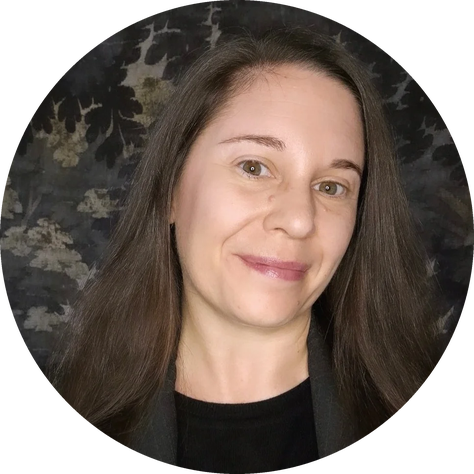
This year so far has been an extremely impactful one for DignitySA.
As you will be well aware, on 10 April we lodged our constitutional challenge for medical assistance in dying to be decriminalised. Since then, all four respondents have decided that they will oppose the case, a reversal of the Minister of Justice’s initial indication that her department would abide by the court’s decision. DignitySA will now face opposing arguments from the Minister of Justice, the National Director of Public Prosecutions, the Minister of Health, and the Health Professions Council of South Africa. To get us there, we requested and received a directive from the Acting Deputy Judge President of the High Court in Pretoria. It sets out a timetable for how we will exchange the remainder of all court papers.
By 30 April 2027, all the respondents must have filed their answering affidavits
By 30 June 2027, DignitySA must file its replying affidavit
By 30 August 2027, DignitySA must file its heads of argument
By 30 October 2027, all the respondents must have filed their heads of argument
This timetable will be of great help to us to hold parties accountable for filing deadlines, and gives us a much clearer idea of when the case might be ready to be given a court date. So, despite the increased opposition to our case, we are in pretty good shape. You can read my fellow directors’ perspectives on these developments in the South African Update in this edition.
This year we have also played a pioneering role in the Advance Directives Coalition (ADC). The ADC is an alliance of organisations and individuals committed to ensuring that all people in South Africa can make their future healthcare wishes known, so their autonomy is respected even if someone cannot speak for themselves. Did you know that you have the right to choose and mandate anyone you trust to communicate your wishes, and make medical decisions for you, when you can’t? If not, you are not alone. The ADC advocates for awareness and implementation of sections 6, 7, and 8 of the National Health Act 61 of 2003 (NHA), which together provide a legal basis for advance healthcare planning in South Africa. This groundbreaking initiative is built on extensive consultations, which we began in late 2025. I am proud to represent DignitySA on the ADC steering committee, which boasts a formidable list of member organisations and experts from a wide range of medical, academic, and legal specialties. Together, we are working on regulations to clarify the operation of sections 6, 7, and 8 of the NHA in practice, and embarking on an education and empowerment campaign to raise awareness of the legal rights and responsibilities in relation to advance healthcare planning. You can learn more about your rights and the ADC by visiting the website.
We have also recruited and begun training a corps of volunteers who are passionate about sharing information about end-of-life options and empowering those in their communities to be able to make choices. Well-known activist Mark Heywood, who volunteers as an Advisory Trustee for DignitySA, is a sterling example of one of our ambassadors, and we are grateful that he provided this edition’s signature Exit Interview.
Perhaps most excitingly for the leadership team right now, we are weeks away from launching a very special offering called the Dignity Navigator to our members. This online tool gently guides members through the steps you need to take to ensure that your affairs are in order, and provides a safe, central ‘vault’ where you can store your key documents, information and wishes. In our Expert Input section, Thabisile Sethaba writes about why taking these proactive steps is so important and personal to her, even though she is young and presumably far from death’s door still.
Please watch your inbox for updates about the Dignity Navigator and our court case. Or better yet, join our WhatsApp group to receive our breaking news. If you would like to become a DignitySA Ambassador, you can find out more about the programme here and, of course, we welcome donations to help to sustain our work.
Sanja Bornman
Executive Director
Sanja joined DignitySA’s board in 2025. She is a senior attorney and gender law and policy specialist who consults to both the private and public-interest law sectors. Her work covers legal advocacy, policy and law reform, and strategic litigation, with a focus on gender-based violence and discrimination, children’s rights, and socio-economic rights. She serves as Vice President of the South African Federation for Mental Health. You can read more about DignitySA’s leadership here.
The Exit Interview

Dignity Matters poses some questions to:
Mark Heywood, the widely admired social justice organiser, writer, researcher and journalist who amazingly also makes the time to support us as an Advisory Trustee to DignitySA.
If calories and indigestion were no object, what culinary indulgence would be your last?
Black pudding, baked beans, fried eggs, a pint of Guinness and a slug of Lagavulin whiskey.
Ideally, how would you like to go?
In October/November 2025 I spent time with my family in sharing my sister-in-law, Sharmaine Seethal’s last days and hours. If you know death is coming, I think that is the way to go: at home, medicated only for pain, surrounded by those you love the most and who love you, with music playing (I recall Lou Reed’s Perfect Day playing over and over), with a view onto a garden, where life still abounds.
Having said that, I share the sentiments expressed by Mersey poet Roger McGough in his poem, Let Me Die a Young Man’s Death. Taking my cue from McGough, as long as it didn’t cause trauma to anyone else, I’d be happy to die on a parkrun, a Drakensberg mountain walk, or a mountain bike ride.
In what publication would your obituary appear, and what would its glorious and slightly exaggerated but still truthful headline be?
The Yorkshire Times: Mark Heywood: unrequited poet dies with his great novel still in his head, but leaves the world a bit juster and fairer
Imagine your memorial service. What music would be playing? What band or artist would be grateful for the opportunity to perform?
I would ask: David Bowie to come back and sing all the songs on his last album, Blackstar, composed and performed as he was dying; Bob Marley to put in a surprise appearance and sing Crazy Baldheads; Samuel Beckett to come by and do a reading from Act Two of Waiting for Godot; Jean Paul Sartre to read my favourite page from Iron in the Soul. My closest loves and family to do the readings of their choice. The collection should go to a committed, angry and effective social justice organisation and the planting of a tree.
Burial or cremation? If transport, permissions and expense were no problem, where would you like to be buried, or have your ashes scattered?
Cremation. Some of my ashes scattered in the Blue Pools at Cathedral Peak in the Drakensberg, and some in the river at Mountain Sanctuary Park in the Magaliesberg mountains where the ashes of two of my children, Joe and Caitlin, who died just before getting a chance at life, were scattered.
If you could choose one object to be buried or cremated with, what would it be and why?
You can’t fit mountains or rivers in coffins. I see no need to be buried with anything. Maybe a sprig of white Jasmine flower if I die in August.
If you were to haunt someone after your demise, where would it be and why?
I’ve never thought about this and I’m not someone who spends any time hating or haunting, but come to think of it, there are quite a few people whose contribution to suffering and destruction has been so great and so intentional that I would happily haunt them with the experience of the horrors they have knowingly inflicted on others. At this moment that would be Benjamin Netanyahu, Donald Trump, Elon Musk and their ilk. I would also like to “out” the ‘desk-killers’, the invisible sociopaths who use their money for evil and injustice and who threaten life on our planet.
Who is in your will? And is there anything that you are leaving that may cause a fight?
I’d like to leave money to fight a cause. But because I spent most of my life seeking justice rather than wealth, I only have enough money, poems and material bric-a-brac to pass on to those I loved, love and who have shared their love, kindness, imagination and life with me. They know who they are, I hope.
What do you still need to do before you kick the bucket?
Too much. Write a novel on a par with 1984 that will last until the end of time and make people love literature, joy, humanity, find purpose and resist injustice.
Finally, is there anything you've secretly wondered about death, but been too polite to ask?
Are there parkruns after death? In my next life can I be a dolphin? Or come back as a great poem or piece of music that lasts for all of time!
Expert Input

Love’s Last Gifts
Thabisile Sethaba is the co-founder of SendOff, a digital platform designed to streamline and simplify funeral planning and arrangements. She is also the powerhouse behind BabesWeDeathcare. The initiative focuses on breaking social taboos around death, grief, and dying, making conversations about funerals, estate planning, and financial cover easier and more accessible especially for the youth and marginalised communities.
This month, DignitySA has been running an awareness campaign called Love’s Last Gifts, and I contributed as a panelist on their September webinar on Afterlife Administration. I am passionate about the importance of preparing for and talking openly about dying and end-of-life planning because my mother passed on unexpectedly when I was eight years old. While I was well-cared for, not a single adult was able to speak to me about the calamity that shaped the rest of my life. When someone is dying, we often forget the children, and tragically, we forget the dying person as well.
I remember walking into my mother's bedroom during the Easter holidays, the air thick with fear, and hearing family members tell her she must "fight and live" for me. We made her dying about our own grief and inability to let go, stripping her of her voice and agency long before the end. That silencing taught me a lesson I have spent my whole life trying to undo, eventually leading me to co-found SendOff, a digital company built to simplify bereavement, and BabesWeDeathcare, a platform designed to make end-of-life conversations authentic and relatable for young people.
Through this work, and as I shared during the recent webinar, I see daily how our societal refusal to engage with passing on leaves families shattered both emotionally and practically. We treat discussing it as morbid, but I firmly believe it is an act of love, and one of the most powerful ways we exercise choice. When we avoid preparing for our passing, we hand our grieving families decisions we could have made ourselves, along with devastating logistical nightmares. Simple oversights can cause monumental stress. For example, failing to update your insurance policies or will after a divorce means the wrong beneficiary might receive your life cover. You have the liberty to nominate whomever you prefer on those policies, but only if you take the time to act on it.
Families are often paralysed by panic in the immediate aftermath of a loss and I often encourage them, especially in the first few hours after someone has passed on, to sit with the body of their loved one. There is no rush. When you are ready you can call an undertaker who will issue the death certificate and assist your family with the initial administration. If the person passed on from natural causes, there is no need to call an ambulance or the police. The deceased estate should ideally be registered with the Master of the High Court within the first 14 days and it helps to have an executor who will offer your family a personalised service. Understanding a few basic procedures prevents families from making costly, grief-driven mistakes and we outlined these steps in the webinar.
I also urge everyone to actively plan for the end of their life by creating what I call a “deathcare plan”. Much like the hospital bag expectant mothers pack, this plan carries your family through the heavy administrative labour of your passing. It must contain your identification, insurance documents, and crucial digital PINs so that your loved ones can cancel running phone subscriptions. Without these conversations and this planning, we leave behind millions in unclaimed benefits that could have supported our children, simply because the funds are quietly consumed by monthly management costs over the years while sitting with the fund.
But end-of-life planning goes far beyond paperwork; it is about choosing how you want to be cared for and remembered. It requires outlining your healthcare preferences and your specific funeral arrangements. During the webinar, I told the story of a mother who called her children together to explicitly state her wishes, from the exact type of coffin she wanted, to rejecting the cultural expectations of wearing black clothes or cutting their hair. Because she documented her desires, her children could truly honour her without conflict or the manipulation of upselling funeral parlours.
This deep, universal need to be heard is exactly why I am a fierce advocate for open, honest end-of-life conversations. My grandmother prayed that sickness would not strip her of her dignity, and mercifully, she passed on peacefully in the spirit we had always known. However, I have sat at bedsides where dignity was stolen because the people around the dying could not bear to talk about, let alone honour, their choices. Speaking openly about what we want is not a surrender; it is the profound, courageous act of saying, “I know what I need, and I deserve to be heard.”
Dying well is fundamentally inseparable from living well. The same systems that deny people dignity in healthcare and housing continue to deny them dignity at the end of life. As a young Black woman in South Africa, I gently but firmly challenge the assumption that this cause is irrelevant to us. Dying does not discriminate, suffering does not discriminate, and the universal hunger to be the author of your own life’s last page unites us all. Do not leave the decisions you are capable of making today to someone else, or to chance.
I encourage you to start the conversation and let those around you know what you would want. Build your deathcare plan, document your wishes and your messages, and store your information centrally. This truly is one of love’s most enduring last gifts.
On the Lighter Side
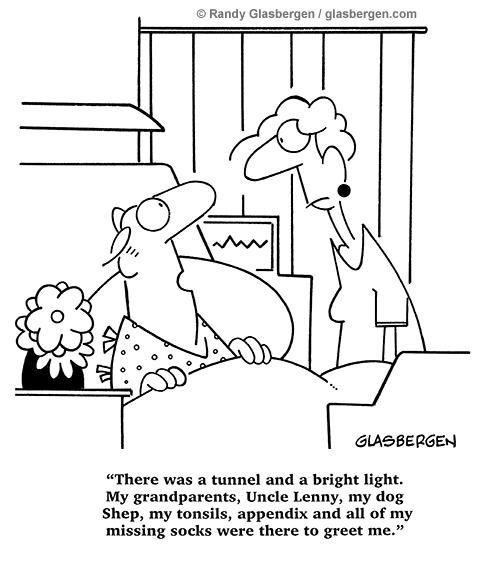
Cartoon by Randy Glasbergen, glasbergen.com.
Popcorn Time

REVIEW:
"The English Patient" (1996)
by Anthony Minghella
Reviewed by: Prof Willem Landman
Rating: ★★★★★
It is exactly 30 years since the release of the film The English Patient, a grand epic with the vast, sweeping north African landscape as backdrop, set in Egypt, but shot in the Tunisian desert at the same location as Star Wars. The vast, uncluttered expanse of the desert evokes the same sense of space and proportion as the Russian steppes in Doctor Zhivago (filmed in Spain and Finland).
The film is based on an eponymous novel by Michael Ondaatje, published in 1992. It was translated into 38 languages, shared the Booker prize in 1992, and won the Golden Man Booker 50 prize having competed against the best Booker winners of the preceding 50 years, with a finalist for each decade.
In 1997, the film won nine Academy Awards (Oscars), including best picture (Saul Zaentz), best director (Anthony Minghella), best supporting actress (Juliette Binoche) and best cinematography (John Seale).
The English Patient is indeed a milestone in the art of filmmaking.
Like the book, it is complex, with the Second World War as looming context, and five key characters. It is filled with intrigue, adventure and passion.
After a summary account of key moments in the complex plot, I propose an assessment of the closing scene of the film, an instance of medical assistance in dying (MAiD). Interestingly, discussions seldom reference this emotionally loaded climax of the film.
The film moves back and forth between two timeframes, the “present” and the “past”.
The “present”
The “present” plays off in the bomb-damaged, abandoned Church of San Girolamo in Fiesole, a town on a hill overlooking Florence, in Italy, in October 1944, towards the end of the Italian campaign in which the Allied forces were driving the Nazis northward through Italy.
With her field hospital relocating, Hana, a Canadian Army nurse (Juliette Binoche), offered to remain behind in the abandoned monastery church to care for an unknown, severely burned man, named “the English patient” (Ralph Fiennes) on account of his accent (later to be identified as a Hungarian, Count Ladislaus de Almásy). He was too badly injured to be relocated and not expected to survive much longer. He is bandaged and unrecognisably disfigured, suffers from amnesia, and does not remember his own name.
Almásy’s only possession is the ancient Greek historian Herodotus’s The Histories, with personal paper fragments and letters tucked inside. Hana reads Herodotus to him and administers morphine to ease his intense pain. Sedated, the English patient’s memory gradually returns and the “past” of the movie is revealed.
Also arriving at the monastery in the “present” are two characters who add to the complex tapestry of the film.
There is the enigmatic Caravaggio (Willem Dafoe), an Italian Canadian working for British intelligence, a friend of Hana’s father. He is at once colourful and somewhat menacing. His hands are bandaged because his thumbs were severed by the Nazis and he shows an interest in Hana’s morphine. Sinisterly, he claims he knows who the English patient is and that he cooperated with the Nazis. He tells Hana that her patient in fact remembers everything.
Also arriving at the church-hospital is the handsome, cheerful Indian Sikh officer Kirpal (Kip) Singh (Naveen Andrews) who volunteered with the British military for sapper bomb disposal under Lord Suffolk. Hana and Kip develop feelings for each other and begin a relationship.
An iconic, truly magical, scene is when Kip hoists Hana up by means of a rope attached to a pulley so she could have a close-up look at the paintings high up on the walls of the church, by flickering light and with dancing shadows on the walls.
Kip withdraws emotionally when Lord Suffolk and his sapper team, with whom he experiences a sense of belonging, are killed while attempting to dismantle a new type of bomb set up under a bridge by the retreating Nazis.
The “past”
From the vantage point of the “present”, the abandoned church serving as a hospital, the English patient (Almásy), sedated by morphine, begins to reveal his past.
Before the war, Almásy was a cartographer who divided his time between a desert camp and Cairo. To draw his maps, he piloted his own plane over the majestic desert landscape.
An Englishwoman, Katharine Clifton (Kristin Scott Thomas), and her husband, Geoffrey Clifton (Colin Firth), accompany Almásy’s desert exploration team. Almásy falls in love with Katharine, mesmerised by her voice as she reads Herodotus’s remarkable story of King Candaules of Lydia aloud by campfire.
When the war breaks out, the Cliftons abandon Almásy’s desert camp. In Cairo, Almásy and Katharine begin an intense affair. But Katharine cuts it short, saying that Geoffrey, whom she had recently married after their studies at the University of Oxford, would go mad if he were to find out.
Geoffrey discovers his wife’s affair with Almásy after she had already ended it. She is wracked with guilt. In an act of jealousy, Geoffrey pilots a plane, with Katharine on board, and deliberately crashes it into Almásy’s camp killing himself instantly, while Almásy survives and Katharine is seriously injured. She admits to Almásy that she always loved him.
Almásy carries Katharine to the nearby Cave of Swimmers for shelter. He promises to return with help and embarks on a long and arduous journey.
He reaches the British-controlled town of El Tag. The British do not believe his story and refuse to mount a rescue mission. Tragically, had he identified the injured Katharine by her real name, and not as his wife, which he did in the hope of receiving urgent help for her, she might have been saved because her name was well known to the British through her husband’s work for them making detailed aerial maps of North Africa.
In the years that follow, Almásy cooperates with German forces in North Africa. This enables him to return to the desert. He retrieves a colleague’s plane buried in the sand, flies back to the Cave of Swimmers, where Katharine’s body has been lying for several years. He wraps her remains in a cloth and attempts to fly her out of the desert. The plane suffers a mechanical failure and catches fire. Almásy is on fire but escapes the flaming inferno by parachute. He suffers from severe burns, leaving him unrecognisable, and is found and rescued by Bedouin tribesmen.
A merciful end
Back to the “present”. The critically burned Almásy, the English patient, suffering from failing organs, distraught and in severe pain, decides that he is ready to die. He signals this to his devoted nurse, Hana, by deliberately pushing several vials of morphine toward her. He says that he has “had enough”. Hana is deeply emotional but understands his desire for a merciful death. She grants his wish by administering a lethal dose of morphine into his IV drip.
As Almásy drifts into permanent sleep, Hana reads aloud the final, heartbreaking letter written by his late lover, Katharine, which she wrote while dying alone in the Cave of Swimmers.
Says AI: “This scene serves as one of the emotional peaks of the film, framing the act not as a crime, but as a final, compassionate gesture of mercy and love between the caregiver and her patient.”
Legalising merciful death
Interestingly, reviews of the film tend not to pick up on this theme of medical assistance in dying (MAiD). Considering contemporary debates about the ethics of both MAiD itself and of legalising MAiD, the following aspects of the final scene of the movie are worth noting:
The English patient was injured, not suffering from an illness, although his organs were beginning to fail because of his injuries;
It is hard to tell whether he was in a terminal state, often defined as likely to die within six months; burn patients now have a better recovery rate than in the 1940s, so he could have been in a terminal state;
He was irremediably injured, irreversibly incapable of ever again leading a life that even approximates normal human enjoyment;
His suffering was because of physical pain as well as resultant mental distress;
We do not have any reason to believe that he was not mentally competent to decide about his continued life and to request MAiD;
His request was voluntary, with no-one coercing or pressuring him into his decision, although the war and limited medical care obviously narrowed his options;
Hana was in the employ of a field hospital with medication provided by the hospital, so it was a case of medical assistance in dying; and
MAiD was administered by the caregiver, not self-administered; the English patient was likely incapable of self-administering due to his injuries.
Would the English patient have been eligible for MAiD as envisioned for South Africa by DignitySA’s constitutional challenge? I believe so.
The English patient was likely mentally competent, had severe injuries making any semblance of a normal life impossible, without ever higher dosages of morphine his suffering was unbearable and intractable, and his request was the outcome of a free choice.
With responsible institutional safeguards in place and observed, assistance like Hana’s would not only be ethically justified (as a matter of right and compassion) but also legal in a South Africa shaped by the normative standards – values, principles and rights – of its Constitution.
Palliative care is always non-negotiable in a MAiD setting. And with the extreme suffering caused by burn wounds palliative care and its limits require increased scrutiny.
Instances of nurses identifying with the suffering of their patients, even to the point of causing their death to end their suffering, are regularly reported worldwide in the media and lead to criminal prosecutions, like our own Smorenburg (1992) High Court case.
These instances involve non-voluntary MAiD where nurses act on what they believe is in patients’ best interest and without patients’ consent. This was not the case with Hana’s deed of compassion since Almásy himself judged his own life no longer worth living and consented to receiving a lethal dosage of morphine.
DignitySA’s court challenge involves voluntary MAiD only.
In conclusion
The English Patient is one of those timeless films that do not show their age despite radical developments in acting style and photographic technology. Hence it can be revisited, like works of classical literature, or groundbreaking movies, such as Ben Hur, The Shawshank Redemption, 2001: A Space Odyssey, or Schindler’s List. It is a story of love, betrayal and perhaps even redemption. Its stunning cinematography beautifully captures the majestic north African desert landscape.
Above all, it is a story of identification and solidarity with another, of caring and compassion for the sufferer, to the point of heeding the ultimate request despite the personal emotional cost involved for the helper.
Script by Michael Ondaatje and Anthony Minghella
Based on Michael Ondaatje’s novel The English Patient
Directed by Anthony Minghella
With Ralph Fiennes as Count Ladislaus de Almásy; Juliette Binoche as Hana; Willem Dafoe as Caravaggio; Naveen Andrews as Kirpal (Kip) Singh; Kristin Scott Thomas as Katharine Clifton; and Colin Firth as Geoffrey Clifton
1996
162 minutes
Awarded nine Oscars
This review was provided by Prof Willem Landman. Willem is DignitySA's Chair and Co-founder, and holds degrees in philosophy, political philosophy, theology and law from the Universities of Stellenbosch, Oxford (as a Rhodes Scholar) and Unisa. He has chaired philosophy departments in South Africa and held a chair in Medical Humanities in the United States. He is the founding CEO of the Ethics Institute of South Africa and a co-founder of the international journal Developing World Bioethics.
Good Reads
REVIEW:
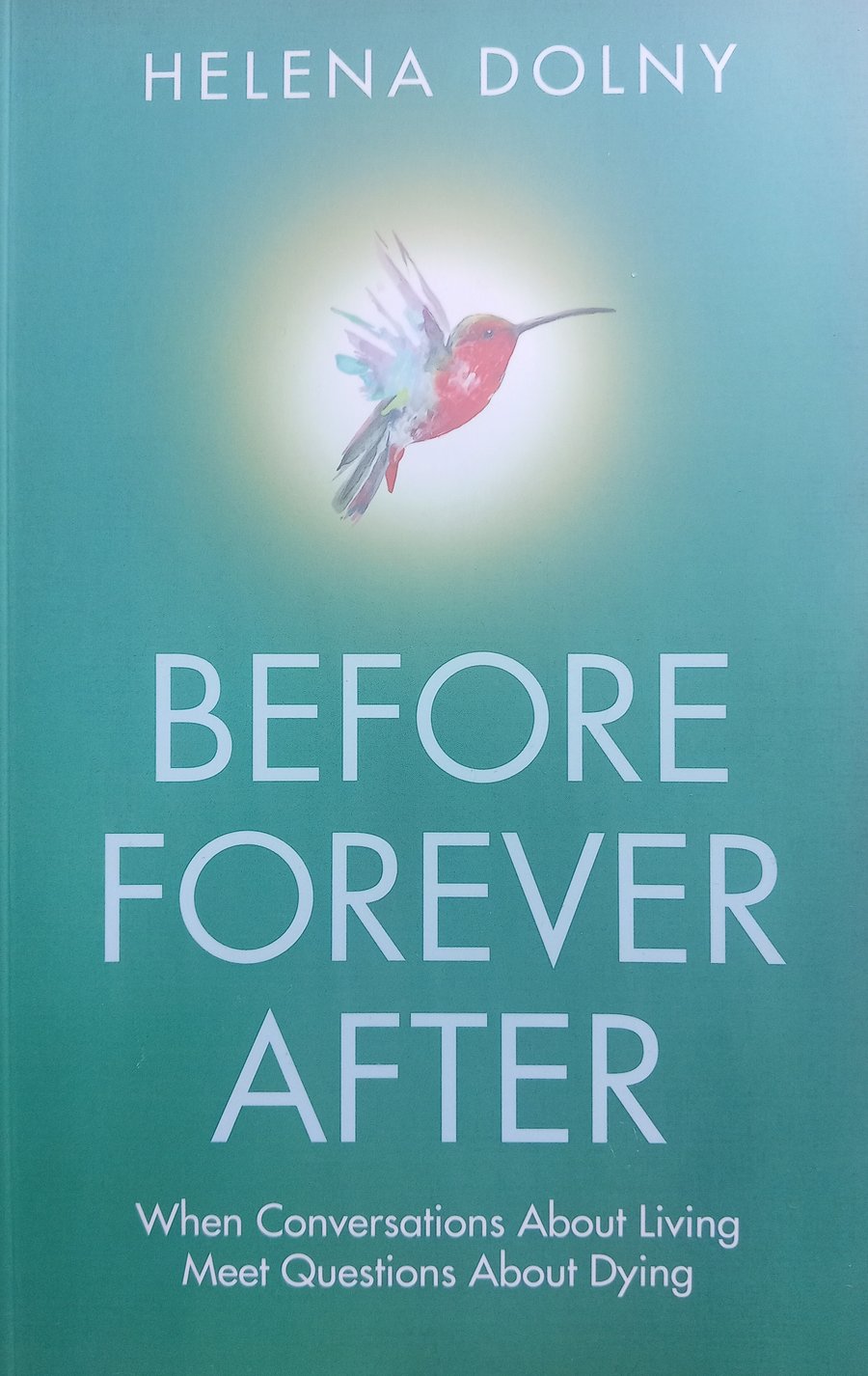
"Before Forever After: When Conversations About Living Meet Questions About Dying"
by Helena Dolny
Reviewed by: Vicki Read
Rating: ★★★★
Before Forever After is difficult to review because it makes you think about things that most of us would rather not think about at all.
Death. Dying. And what happens before we get there.
Helena Dolny’s Before Forever After gives us a collection of real experiences and difficult conversations and, in doing so, asks us to consider something much more personal: what do we actually want for ourselves at the end of our lives?
That sounds like a simple question. It isn’t.
As I read, I found myself stopping to think about my own wishes, the things I would want my loved ones to know, and the decisions I would want to have made while I was still able to make them. It made me realise how much of end-of-life planning isn’t really about dying at all. It is about making sure that the people we leave behind aren’t left trying to guess what we would have wanted.
And for me, that was one of the most valuable things about this book.
It doesn’t present death as something belonging only in hospitals or hospices. It brings it into our ordinary lives, our families, our relationships, our homes and our conversations. There are practical questions, emotional questions and deeply personal ones. Some are uncomfortable and some are surprisingly freeing.
I have always found it strange that we can talk quite openly about birth, relationships, illness, money and even our plans for retirement, yet the subject of death can bring a conversation to an abrupt halt.
Perhaps we are afraid that talking about death somehow makes it more real, but I’m now learning that talking about death can actually make us more present in our lives.
It can make us think about what matters. It can encourage us to put our affairs in order, to have difficult conversations while we still can, to tell people what we want, and perhaps just as importantly, to listen to what the people we love want.
As I have started exploring the world of death and dying more deeply, including my own interest in becoming a death doula, I have realised that I am not particularly interested in death as an abstract concept. I am interested in what happens to us as human beings when we know that our time is limited, and how we can help one another navigate that time with as much honesty, dignity and compassion as possible.
I don’t think I am any less afraid of death because of this exploration. Rather, I am becoming more comfortable with the idea that death is something I can acknowledge without allowing it to overshadow life.
There is something oddly comforting about being able to say, “Yes, this is going to happen to me one day.”
And then ask, “So what do I want to do with the time I have before it does?”
That is what stayed with me after reading Before Forever After.
It reminded me that dignity at the end of life doesn’t begin in our final days. Perhaps it begins much earlier, with knowing ourselves, expressing our wishes, having the conversations we have been avoiding, and giving the people we love the gift of not having to make every decision for us.
I also came away thinking that preparing for death is not a morbid exercise. There is something profoundly loving about it.
We prepare not only for ourselves, but for the people who will one day have to carry on without us.
Before Forever After won’t give you all the answers. I don’t think it is meant to. What it does is encourage you to start asking the questions.
And perhaps that is the point.
Perhaps the greatest gift this book gave me was the reminder that we don’t have to wait until someone is dying to begin talking about death. We can have those conversations while we are well, while we are together, and while there is still time to listen to one another.
And perhaps that is where dignity begins.
Vicki Read is a DignitySA Ambassador based in White River, Mpumalanga. In her application to become an Ambassador she wrote, “I have spent much of my working life organising, coordinating, communicating and making sure things happen properly. For years, I viewed those skills as merely administrative. Yet now I see that those same abilities could be used to bring order and comfort to families during one of the hardest periods of their lives…. At its heart, I believe (that being an Ambassador for DignitySA) is about setting yourself aside long enough to accompany another person through one of the most important moments of their life. I know it's a cliché, but I want to make a difference in someone's life that is meaningful, while also contributing to something on a larger scale. For me, that means being part of the work to challenge the current constitutional and judicial position around dignity, choice and end-of-life care in South Africa.”
 South African Update
In DignitySA’s press statement that we released last week, regarding the news that all four respondents will now oppose our constitutional challenge, our co-founder and Chair, Prof Willem Landman, noted that, “Opposition from the State is a normal part of constitutional litigation, and it means the court will hear the full range of arguments before it decides a question of this importance. Nothing about the merits of our case has changed. It rests on the Constitution’s commitments to dignity, equality, bodily autonomy and life, and on the experiences of real South Africans who suffered unbearably at the end of their lives. We welcome the clear timetable the court has set and look forward to presenting our case.”
DignitySA’s director Vuya Ilengou added that, “This case has always been about South Africans facing unbearable suffering at the end of life, and about the choices available to them. The legal process ahead will be demanding, but our commitment to this cause remains unchanged. We are deeply grateful to everyone who has supported our work over the past 15 years and who continues to stand with us as we take this case forward. Every member, every signature on our petition and every donation strengthens our ability to take this case forward. We invite all South Africans who believe in the right to a dignified death to join us and add their voice.”
 Global News Round-Up
Developments across the world in the last two months demonstrate that when public demand for autonomy is paired with constitutional protections and persistent advocacy, progress is unstoppable. From landmark constitutional rulings in Paris and nationwide legal coverage in Australia to a historic implementation in the American Midwest, August and September 2026 marked watershed victories for end-of-life autonomy. While political shifts in Westminster present fresh challenges in the UK, the global momentum toward compassionate choice and bodily self-determination is now undeniable.
France: On the 14th of August the Conseil constitutionnel issued its verdict after reviewing five separate appeals. The Council declared not a single article contrary to the Constitution, ruling that a conditional right to aid in dying helps give effect to every person’s right to personal liberty and a dignified end of life. The law was officially published in the Official Journal on 18 August, cementing France’s place among the European nations guaranteeing statutory end-of-life choice.
Australia: On the evening of Thursday, 27 August, the Northern Territory Parliament passed the Rights of the Terminally Ill Bill in a conscience vote. With this vote, Voluntary Assisted Dying (VAD) is now officially lawful across every single Australian state and territory. The passage rectifies a 30-year grievance, restoring territory-level rights that were stripped away in 1997 when the Federal Parliament overturned the Northern Territory's pioneering 1995 VAD law.
United Kingdom: Sponsored by MP Lauren Edwards, the Terminally Ill Adults (End of Life) Bill officially returned to the House of Commons on 11 September. The bill had previously cleared the Commons twice (in November 2024 and June 2025) before being stalled by filibustering tactics and extensive amendments in the House of Lords. Lacking active sponsorship from Downing Street, the bill’s passage now relies entirely on unwhipped conscience votes from individual MPs across party lines.
United States (Illinois): Following the defeat of conservative repeal bills and the dismissal of anti-reform court injunctions in late August, Illinois’s landmark End-of-Life Options for Terminally Ill Patients Act ("Deb's Law") officially came into effect on 12 September 2026. Illinois is now actively delivering care, making history as the 13th U.S. jurisdiction, and the very first state in the American Midwest, to offer medical aid in dying to terminally ill adults.
More Articles From Our Website

Join Us
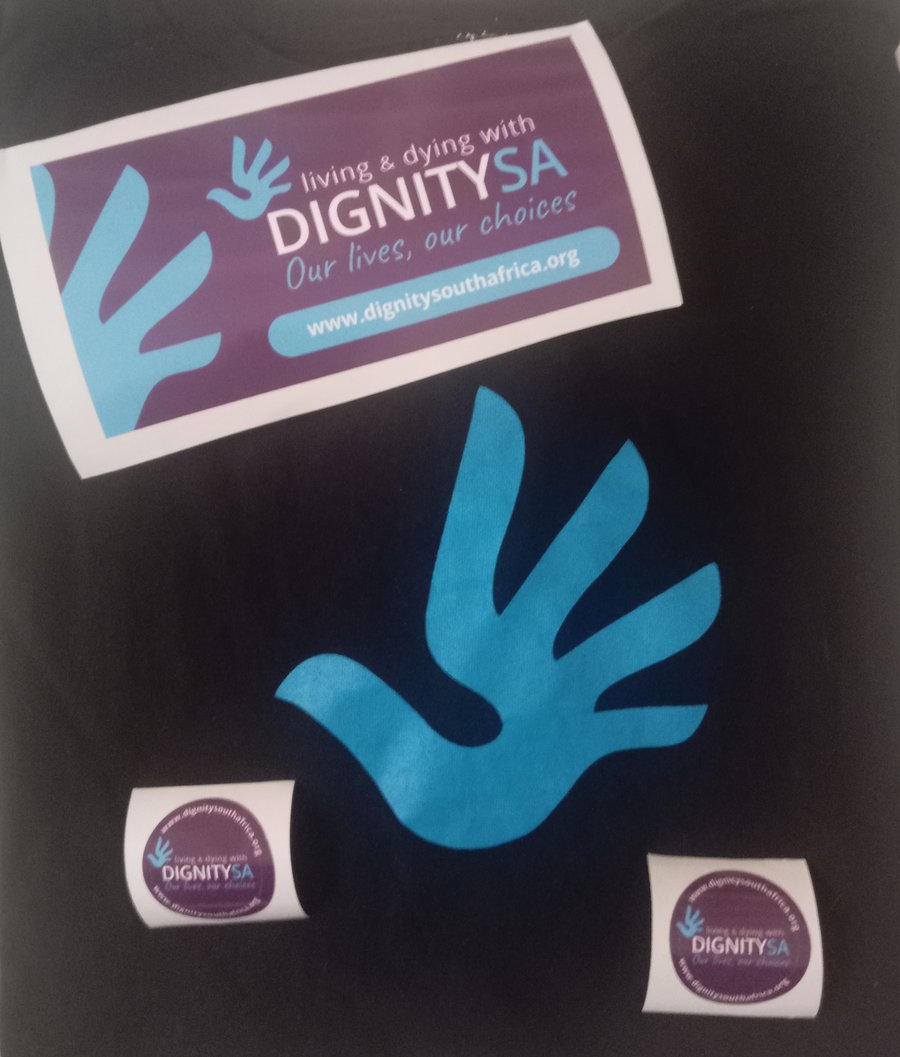
For the remainder of this year we will be calling for donations to the significant legal costs that we anticipate incurring in 2027. You can show your support by:
Receiving DignitySA stickers when you donate R50 or more once-off.
Receiving DignitySA stickers and a t-shirt when you donate R50 a month or more.
DignitySA can provide our donors with section 18A tax certificates. To make a donation, of any amount, please visit https://www.dignitysouthafrica.org/donate
Poetry Apothecary

Ancestral Wealth
by Vonani Bila
This is an extract from Vonani Bila’s poem titled ‘Ancestral Wealth’ which he dedicated to his father Risimati Daniel Bila (1931-1989).
VIII
Papa, I know it took us twenty years to erect your tombstone
All along the wind was blowing you away
The sun was burning you
Your pillow was your hand
But now Bila, Mhlahlandlela, rest in peace
Do not open the grave and come home wearing shorts
Since you left, your wife has remained in the house
I’ve not seen a man sitting on your chair
It’s still your house
Full of trees and vegetables7/8 u ya lithanda isaka la mazambani
U ya lithanda isaka la mazambani
